
Last Updated: November 4, 2026
Quick Summary
To care for linen sustainably, start by reading the care label, then wash in cold or lukewarm water on a gentle cycle with a low spin. Use a mild, fragrance-free detergent at half the usual dose, and air-dry flat or on a shaded line to avoid shrinkage and fading.
- Read the care label first, since it overrides general rules for your specific garment.
- Wash in cold or lukewarm water to protect the fibers and preserve color.
- Use half the standard detergent dose and choose a mild, fragrance-free product.
- Never use chlorine bleach, which breaks down linen fibers and causes permanent yellowing.
- Air-dry flat or in shade, and avoid the dryer for the first several washes.
Table of Contents
- Start With the Care Label Before You Wash
- How to Wash Linen Clothes in Washing Machine on a Gentle Cycle
- How to Wash Linen Clothes Without Shrinking
- How to Wash Linen Clothes by Hand
- Picking the Best Detergent for Linen Clothes and Dosing It Right
- Air-Drying, Wrinkles and When to Use a Dryer
- Troubleshooting Stains, Odors and Fading on Your Linen Pieces
- Keep Your Linen Pieces Wearing Longer This Season
- Frequently Asked Questions
Linen is one of the most durable natural fibers you can own, and it gets softer with every wash. Still, a shirt that is treated badly can shrink, fade, or pill in a single cycle.
Most of the work starts before the washer ever turns on. The care label is your first and best guide. Read it, follow it, and build your routine around it.
Start With the Care Label Before You Wash
The care label is the only piece of advice written for your specific garment, and it should override every general rule in this guide. For a practical way to judge a garment's construction and quality alongside its care needs, see a practical guide to judging apparel quality. Before you sort a single item, read the label for three things: fiber content, the safe washing method, and any finish or trim that changes the rules.
Look for these common symbols and instructions:
- A basin with a number inside means the maximum water temperature in degrees Celsius.
- A basin with a hand inside means the item should be washed by hand only.
- A square with a circle means it can be tumble dried; dots inside the circle indicate heat level, with one dot for low heat.
Adapt the Advice to Fiber Blends
Pure linen behaves differently from a linen-cotton or linen-viscose blend. A cotton blend may tolerate a warmer wash and a slightly higher spin, while a viscose or rayon blend can shrink and lose strength when wet, so it needs colder water and flat drying. Read the fiber percentages, not just the first word on the label. When linen is the minor fiber, follow the care instructions for the dominant fiber, because that material will drive how the garment responds to water and heat.
Account for Dyes and Finishes
Garment-dyed and overdyed linen can release color for the first several washes. Wash those pieces alone or with similar darks in cold water, and skip any detergent with optical brighteners, which can shift the shade. A label that mentions a wrinkle-resistant or easy-care finish usually means the fabric has been treated with a resin; those finishes last longer with cold water and low heat, and high heat can break them down and leave the fabric stiff.
Handle Structured Details Separately
Embroidery, lace trim, linings, and covered buttons rarely share the same care needs as the linen shell. Turn the garment inside out and check the trim by feel: raised embroidery can snag in a machine, and a fused lining can bubble if washed warm.
Watch out: A label that says "dry clean only" does not always mean the piece cannot be washed at home, but it does mean the manufacturer will not stand behind a home wash.
How to Wash Linen Clothes in Washing Machine on a Gentle Cycle
A washing machine is a fine option for linen when you set it up correctly. The goal is to reduce friction, heat, and spin force, since those are the main causes of wear.
Follow these steps:
- Turn each garment inside out to protect the surface and reduce pilling.
- Close buttons and zippers so they do not snag other items.
- Sort linen by color. Wash whites separately from darks, since linen can release dye, especially when new.
- Load the drum no more than two-thirds full so the clothes can move freely.
- Select the gentle or delicate cycle, with a cold or lukewarm water setting.
- Choose a low-spin or reduced-spin option if your machine has one.
Many customers ask whether linen needs a special wash bag. A mesh bag is useful for small or delicate pieces, such as lace trim or thin scarves, but it is not required for a standard shirt or pair of trousers.
Choosing Water Temperature and Spin Speed
Cold water is the safest default for linen. It protects the fibers and helps preserve color. Warm water works for heavily soiled items, but hot water increases the risk of shrinkage and fading.
Spin speed matters as much as temperature. A high spin speed creates creases that can set into the fabric, and it stresses the seams.
How to Wash Linen Clothes Without Shrinking
Shrinkage is the most common complaint about linen, and most of it is avoidable. Linen contracts when exposed to heat and agitation, particularly in the first few washes.
To prevent shrinkage:
- Wash in cold or lukewarm water only.
- Use a gentle cycle with minimal agitation.
- Avoid the dryer for the first several washes, or use the lowest heat setting.
A common mistake is assuming that a pre-shrunk label guarantees no further shrinkage. Pre-shrinking reduces the risk but does not eliminate it. Treat every new linen piece with care from the first wash.
How to Wash Linen Clothes by Hand
Handwashing is the gentlest method and the one most people overlook. It also gives you the most control over the process.
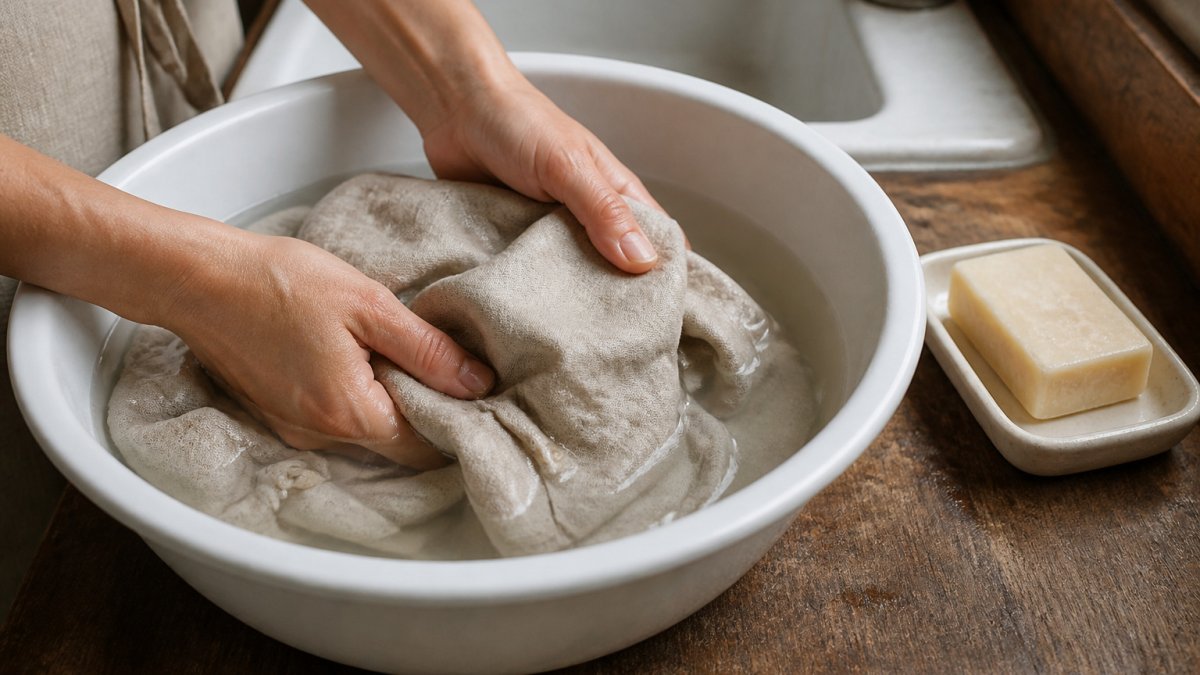
Here is the simple routine:
- Fill a clean basin with cool water and add a small amount of mild detergent.
- Submerge the garment and gently swirl it. Do not scrub, twist, or wring.
- Let it soak for five to ten minutes, then swish it through the water a few times.
- Drain the water and refill the basin with clean cool water to rinse.
- Press the water out gently. Roll the garment in a clean towel and press again.
- Lay it flat on a dry towel or a drying rack to finish.
Handwashing takes more time, but it gives you the most control over the process. For a single linen shirt worn to a summer event, it is often the right choice.
Picking the Best Detergent for Linen Clothes and Dosing It Right
Linen responds best to a mild, pH-neutral detergent.
Read the ingredient list before choosing a detergent, since "natural" is not a guarantee of gentleness.
Dosing matters as much as product choice.
Water hardness also plays a role.
Watch out: Never use chlorine bleach on linen.
Choosing the right detergent and dose protects linen from residue, dullness and damage.
| Item | Recommended | Avoid |
|---|---|---|
| Detergent type | Mild, pH-neutral, fragrance-free | Heavy fragrance, optical brighteners |
| Starting dose | Half the bottle's standard amount | Full dose on light loads |
| Hard water | Use slightly less, consider softener | Full dose without adjustment |
| Whitening | Oxygen-based stain remover | Chlorine bleach |
Air-Drying, Wrinkles and When to Use a Dryer
Air-drying is the most sustainable option. It uses no electricity and is the gentlest on the fabric.
Linen wrinkles easily, and many people accept the crinkled look as part of its charm. If you prefer a smoother finish, iron while the fabric is still slightly damp.
If you do use a dryer, choose the lowest heat setting and remove the clothes while they are still a little damp.
Troubleshooting Stains, Odors and Fading on Your Linen Pieces
Most linen problems have a specific cause, and matching the symptom to the cause is faster than guessing at a fix. Use this symptom guide before you reach for another wash cycle.
Shrinkage
Linen contracts when heat and agitation relax the fibers, and the first two or three washes are when most of it happens. If a piece comes out short, soak it in cool water for ten minutes, then gently stretch it back to its original measurements while damp and lay it flat to dry. Do not hang wet linen to dry, because the weight of the water pulls the garment long and distorts the shoulders. To avoid the problem next time, wash cold, use the lowest spin, and keep the piece out of the dryer.
Color Bleeding
New linen, especially deep indigo, black, and saturated garment-dyed shades, can release dye in the first few washes. Wash those pieces alone or with like colors in cold water, and avoid leaving them soaking in the machine after the cycle ends. If a light piece picks up dye, rewash it promptly in cold water with a color-safe oxygen bleach; do not use chlorine bleach, which can set the transferred dye and yellow the linen.
Persistent Wrinkles
Linen wrinkles because the fibers have low elasticity, and creases that are pressed in while the fabric is hot are harder to lift. Iron while the piece is still slightly damp, use steam, and press on the reverse side for dark colors to avoid shine. Linen also suits a minimalist wardrobe, as shown in vintage coastal apparel for minimalist style.
Stiffness
Stiff linen usually means detergent residue or mineral buildup, not worn-out fabric. Cut the detergent dose in half, add an extra rinse cycle, and check your water hardness; hard water leaves calcium and magnesium deposits that make fibers feel boardy. A laundry water softener or a half cup of white vinegar in the rinse can help, but do not mix vinegar with bleach.
Stains
Treat stains promptly and with cold water, since hot water can set protein-based stains like sweat, blood, and food. For oil or grease, dab a small amount of dish soap on the spot, let it sit for ten minutes, then wash as usual. For sweat odor, soak the garment in cold water with a half cup of white vinegar for 30 minutes before washing.
Yellowing and Fading
Yellowing on white linen often comes from detergent residue, body oils, or chlorine bleach exposure. Use an oxygen-based brightener with cold water and avoid chlorine bleach entirely, since it breaks down the fibers and causes permanent yellowing.
Watch out: If a stain or odor survives two gentle treatments, stop washing and take the piece to a professional cleaner rather than escalating with heat or strong chemicals, which can damage the fiber beyond repair.
Keep Your Linen Pieces Wearing Longer This Season
The most sustainable linen is the linen you already own and keep wearing. If you are planning future purchases, a guide to choosing sustainable coastal fashion that lasts covers what to look for. See how durable coastal clothing is built for repeated wear and outdoor use.
When a piece does wear out, mend it before you replace it. A small tear or a loose button takes a few minutes to fix and extends the life of the garment.
Caring for your linen well helps the fabric last for seasons to come. Start with the care label, follow the steps above, and your linen will look better with every wear.
Frequently Asked Questions
How do you care for linen clothing?
Check the care label first, then wash linen in cool or lukewarm water on a gentle cycle with a mild, fragrance-free detergent. Avoid hot water and high spin speeds, which cause shrinkage and wear. Air-dry flat or on a line out of direct sun. Linen softens with each wash, so careful, regular care keeps pieces comfortable.
How do you wash linen clothes without shrinking them?
Use cold or lukewarm water, never hot, and select a gentle or delicate cycle with low spin. Turn garments inside out, use a mild detergent at the lower end of the recommended dose, and avoid the tumble dryer. Reshape the piece while damp and let it air-dry flat. Shrinkage is usually caused by heat and agitation, so reducing both protects the fit.
What is the best detergent for linen clothes?
A mild, fragrance-free liquid detergent works best for linen because it rinses out cleanly and avoids residue that can stiffen fibers. Water hardness affects how much you need, so start with less than the label suggests and adjust. Avoid bleach and fabric softener, which can weaken fibers and reduce breathability over time.
How do you reduce wrinkles in linen without ironing?
Remove garments from the wash promptly and shake them out before hanging. Hang linen on a line or hanger in a shaded, airy spot so wrinkles relax as it dries. While still slightly damp, smooth the fabric by hand and reshape the seams. If wrinkles remain, a light steam pass is often enough, since linen generally responds well to a little moisture and gentle heat.
