
Table of Contents
- Quick Comparison: Durable Coastal Clothing for Outdoor Activities
- How to Judge Durability in Coastal Clothing
- What to Wear for Beach Walks
- Coastal Hiking Outfits That Handle Wind and Weather
- Outdoor Clothing Layering Tips for Changing Coastal Conditions
- Wind-Resistant Clothing for Outdoor Activities
- Conclusion
- Frequently Asked Questions
Last Updated: October 12, 2026
Quick Comparison: Durable Coastal Clothing for Outdoor Activities
Durable coastal clothing for outdoor activities is apparel built to survive salt air, abrasive sand, and sudden wind without losing its shape or comfort. At Rhody Life, we build vintage-inspired coastal gear for people who actually use it, from shoreline walks to boat runs. This guide breaks down how to judge durability, what to wear for each activity, and how to layer when the weather shifts.
Below is our quick comparison of the pieces we reach for most, followed by the details that matter.
| Item | Price | Best For | Key Durability Feature |
|---|---|---|---|
| Rhody Life Wrack Line Tee | $33.00 | Beach walks, everyday wear | Heavyweight 6.1 oz ring-spun cotton, double-needle stitching |
| Bristol Beach Club Lighthouse Tee | $28.00 | Casual outdoor wear | 6.1 oz ring-spun cotton, tubular knit with no side seams |
| Rhody Local Tide Beach Sweater | $78.00 | Layering, sunset walks | Cotton-blend knit, lightweight and breathable |
| East Bay Fleece Mock-Neck Crew | $68.00 | Cold mornings, wind | 10.3 oz thick fleece blend, mock neck |
| Rhody Surf Cap | $35.00 | Sun protection, beach days | Enzyme-washed cotton twill, adjustable metal slider |
| Local Tide Organic Cotton Cap | $35.00 | Hiking, daily wear | 8 oz organic cotton twill, brass-slider closure |
| Local Tide Yoga Tank | $39.00 | Kayaking, active use | Nylon-spandex stretch, moves with you |
How to Judge Durability in Coastal Clothing
Fabric weight and construction decide whether a piece survives a season or three. Coastal conditions are harder on clothing than inland wear: salt breaks down fibers, sand acts like sandpaper, and UV light fades dye. Most guides skip this, but it is the single biggest factor in whether your gear lasts.

Fabric Weight and Abrasion Resistance
Heavier fabrics resist abrasion better. A 6.1 oz ring-spun cotton tee, like our Wrack Line Tee, holds up to repeated washing and rough shoreline use far better than a thin 4 oz shirt. For active wear, nylon-spandex blends like our Local Tide Yoga Tank resist stretching and pilling.

Stitching, Seams, and Hardware
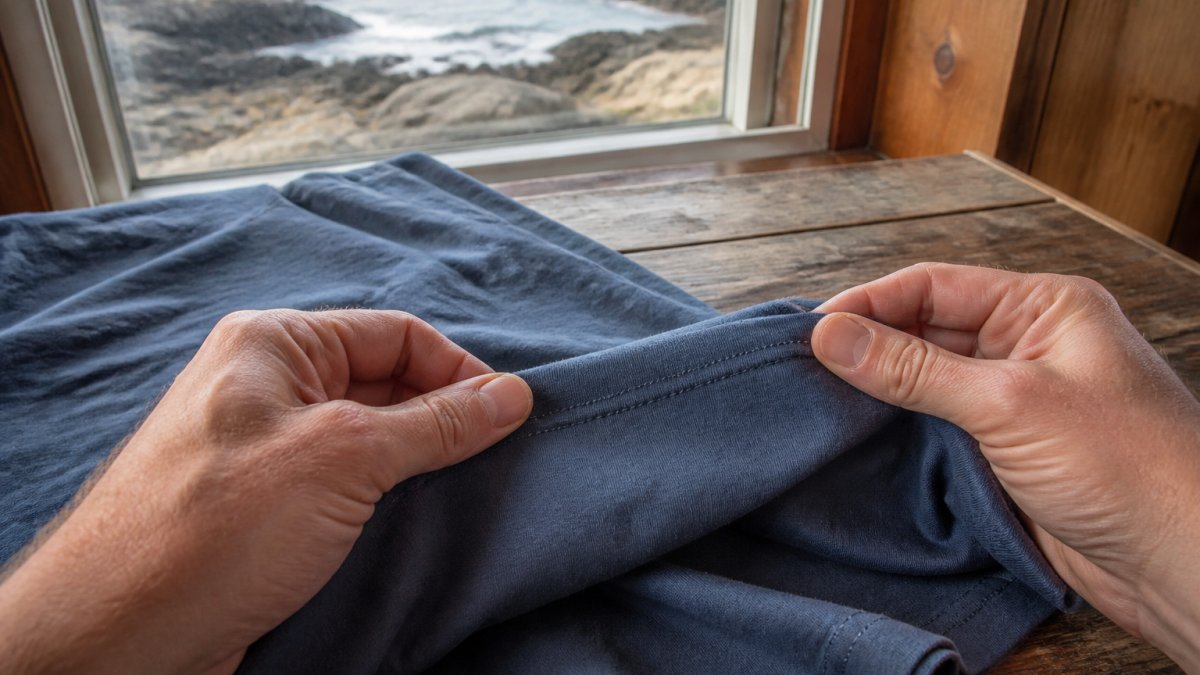
Double-needle stitching and tubular knit construction prevent seams from splitting under stress. Metal hardware, like the brass slider on our Local Tide Organic Cotton Cap, outlasts plastic closures that crack in cold weather.
What to Wear for Beach Walks
What to wear for beach walks comes down to breathable layers, sun protection, and fabric that tolerates sand and salt without turning stiff. A lightweight tee, a cap, and a light sweater you can tie around your waist covers most conditions, but the details of how each piece handles coastal wear matter more than the silhouette.
How Sand, Salt, and Sun Change the Equation
Sand is abrasive at the microscopic level. Fine quartz grains work into fabric and act like grit against the weave, which is why loosely knit, thin tees pill and thin out at the hem and shoulders first. Salt is hygroscopic, it pulls moisture from the air and holds it in the fiber, so a cotton tee worn on a damp morning stays heavy longer than the same tee worn inland. UV exposure breaks down dye and weakens natural fibers over a season of regular use.
That combination favors three things:
- Tighter, heavier weaves that resist sand intrusion and hold shape after repeated washing.
- Pre-shrunk or garment-dyed cotton so the fit you buy is the fit you keep.
- Metal hardware on caps and closures, because plastic sliders get brittle in cold wind and crack.
A Practical Beach-Walk Kit
Our Rhody Surf Cap ($35.00) handles sun and wind with a curved bill and breathable six-panel build; the enzyme-washed cotton twill softens with wear instead of stiffening. For the walk itself, the Rhody Life Wrack Line Tee ($33.00) is garment-dyed and pre-shrunk, so it stays soft and keeps its shape after repeated washes, the 6.1 oz ring-spun cotton is heavy enough that sand brushes off rather than embedding. Pair it with the Rhody Local Tide Beach Sweater ($78.00) for the cooler stretches near the water; the cotton-blend knit breathes so you do not overheat when the sun comes back out.
- Breathable cotton tee for the base layer
- Adjustable cap for sun protection
- Lightweight sweater for wind and shade
- Relaxed fit so you can move freely on sand
Beach Walks vs. Other Shoreline Activities
A beach walk is a low-abrasion, low-sweat activity compared with, say, kayaking or scrambling over rocks. That means you can lean on natural fibers like cotton for comfort, because you are not generating enough moisture to soak them through. If your walk turns into a tide-pool scramble or a long hike back over dunes, switch the base layer to a synthetic or blend, cotton that gets wet stays wet and pulls heat off your skin.
Coastal Hiking Outfits That Handle Wind and Weather
Coastal hiking outfits need wind resistance and freedom of movement more than heavy insulation. Trails near the shore are exposed, and wind cuts through thin fabric fast.
Start with the Local Tide Women's Yoga & Pilates Tank ($39.00) if you run warm. Its nylon-spandex fabric moves with you and resists pilling on pack straps. Add the East Bay Stitched Fleece Mock-Neck Crew ($68.00) for cold, windy mornings. The mock neck blocks wind at the throat, and the 10.3 oz fleece blend is thick enough to hold warmth without bulk.

For head coverage on exposed ridgelines, the Local Tide Organic Cotton Baseball Cap ($35.00) uses an 8 oz organic cotton twill that holds its shape and a brass-slider closure that stays put.
Outdoor Clothing Layering Tips for Changing Coastal Conditions
Outdoor clothing layering tips for coastal weather start with three thin layers, not one thick one. Coastal temperatures swing fast, and a single heavy jacket leaves you either sweating or shivering.
Build your system like this:
- Base layer: A breathable tee or tank against your skin, like the Wrack Line Tee or the Local Tide Yoga Tank.
- Mid layer: A sweater or fleece for warmth, like the Local Tide Beach Sweater or the East Bay Fleece Crew.
- Outer layer: A windbreaker or water-resistant shell you can pack down small.
The goal is packability. A layer you can stuff in a bag and pull out when the wind picks up is worth more than a bulky jacket you leave at home.
Wind-Resistant Clothing for Outdoor Activities
Wind-resistant clothing for outdoor activities works by blocking airflow while still letting moisture escape. On the coast, wind is the variable most people underestimate: a 15 mph breeze off cold water can make a 55°F afternoon feel like a 45°F one, and it strips warmth from any layer that does not cut airflow. The mechanism is simple, a tighter weave or a denser knit reduces the volume of air that passes through the fabric, and a high collar or mock neck protects the throat, which is where most heat loss happens when you are standing still.
What Actually Blocks Wind
Not all fabrics block wind equally, and the trade-off is always breathability:
- Tightly woven cotton twill (like our caps) cuts wind noticeably better than a loose knit, but it does not stretch and holds moisture.
- Thick fleece blends trap a layer of still air against the body, which is why a 10.3 oz fleece like the East Bay Stitched Fleece Mock-Neck Crew ($68.00) feels warm even before you add a shell.
- Woven synthetic shells block the most wind but trap sweat unless they have vents or a breathable membrane.
- Loose knits and mesh move air freely, great for summer, useless in a stiff onshore breeze.
A Layering Plan for Windy Coastal Days
A practical system for a windy shoreline walk or exposed trail:
- Base: a breathable tee or tank against the skin.
- Mid: the East Bay Fleece Mock-Neck Crew for warmth and a first line of wind defense at the throat.
- Outer: a packable windbreaker or water-resistant shell you can stuff in a bag and pull out when the gusts pick up.
The goal is packability. A layer you can stuff in a bag and pull out when the wind picks up is worth more than a bulky jacket you leave at home.
Head and Hands
Both of our caps use tightly woven cotton twill that cuts wind better than loose knits. The Rhody Surf Cap and the Local Tide Organic Cotton Cap both adjust with metal or brass sliders, so they stay on in a stiff breeze instead of blowing off. On the coldest, windiest mornings, a mock neck plus a cap does more for perceived warmth than adding a second mid layer.
Conclusion
Coastal conditions punish cheap gear. Salt, sand, and wind wear down thin fabric and weak seams faster than most people expect, and replacing worn-out apparel every season costs more than buying well once.
We build Rhody Life pieces for exactly this kind of use. Our Wrack Line Tee uses heavyweight ring-spun cotton and double-needle stitching, our East Bay Fleece Mock-Neck Crew blocks wind with a thick 10.3 oz blend, and our Local Tide Organic Cotton Cap holds its shape with an 8 oz twill build. Each piece is made for people who actually spend time on the shoreline.
Get started with Rhody Life and gear that holds up season after season.
Frequently Asked Questions
What should you wear for outdoor activities on the coast?
Start with a breathable base layer like a heavyweight cotton tee, add a lightweight mid-layer such as a cotton-blend sweater, and finish with a wind-resistant outer layer. Coastal weather shifts fast, so packable layers beat a single heavy jacket. For beach walks, a relaxed tee and an adjustable cap work well. For coastal hiking, choose durable fabrics with double-needle stitching that resist abrasion from rocks and brush.
What fabrics work best for windy beach walks?
Tightly woven cotton and cotton-blend knits block wind better than loose mesh or thin synthetic fabrics. A 6.1 oz ring-spun cotton tee holds its shape in a breeze, and a cotton-blend sweater adds warmth without bulk. Avoid lightweight polyester shells that flap and let wind through. For outer protection, choose a windbreaker or a dense knit layer that stays close to the body and does not balloon in gusts.
How should you layer clothes for changing coastal conditions?
Use three layers: a moisture-wicking base, an insulating mid-layer, and a wind-resistant outer shell. Coastal temperatures can swing 15 to 20 degrees between morning and afternoon, so removable layers matter more than thickness. Start with a breathable tee, add a fleece or knit sweater, and keep a packable windbreaker in your bag. Adjust as you move between sun, shade, and shoreline breeze.
How do you choose durable clothing for coastal weather?
Check fabric weight, stitching, and hardware. Heavyweight ring-spun cotton (6.1 oz or more) resists pilling and holds color after repeated washes. Double-needle stitching at stress points, tubular knit construction, and sewn-in labels all signal longer wear. For hats, look for enzyme-washed cotton twill with a metal slider closure. These details matter more than brand names when you want gear that lasts through salt, sand, and sun.
What is the 3-3-3 rule for clothing?
The 3-3-3 rule is a packing guideline: three tops, three bottoms, and three pairs of shoes for a three-day trip. It keeps your bag light while covering most weather. For coastal trips, swap one top for a lightweight layer like a cotton-blend sweater or windbreaker. The rule works best when each piece is versatile enough to mix and match, so you get more outfits from fewer items.