
Table of Contents
- Why Vintage Coastal Apparel Fits Minimalist Style
- Vintage-Inspired Coastal Fashion Trends for 2026
- Minimalist Capsule Wardrobe Essentials for Coastal Living
- How to Style Vintage Coastal Outfits
- Sizing and Fit Guide for Vintage Silhouettes
- Care and Maintenance of Vintage Coastal Fabrics
- Budget-Friendly Sourcing for Vintage Coastal Apparel
- Frequently Asked Questions
Last Updated: September 18, 2026
Why Vintage Coastal Apparel Fits Minimalist Style
Vintage coastal apparel for minimalist style works because both ideas chase the same goal: a small number of pieces that look intentional, feel comfortable, and never go out of season. Where fast fashion pushes volume, vintage coastal dressing rewards restraint. Clean lines, soft neutrals, and natural fibers do the heavy lifting, so a ten-piece wardrobe can outdress a closet full of trends.
Vintage-Inspired Coastal Fashion Trends for 2026
The strongest vintage-inspired coastal fashion trends in 2026 lean into worn-in textures and quiet color. Think faded colors, sea-themed embroidery, and retro tees cut in modern, relaxed fits. East Coast inspiration is everywhere, but the execution is calmer than in past seasons.
Three shifts stand out:
- Barefoot luxury over logos. Visible branding is out; texture is in.
- Performance fabrics meet vintage cuts. Breathable textiles now show up in classic silhouettes.
- Capsule thinking. Buyers want fewer, better layering pieces that work across seasons.
Minimalist Capsule Wardrobe Essentials for Coastal Living
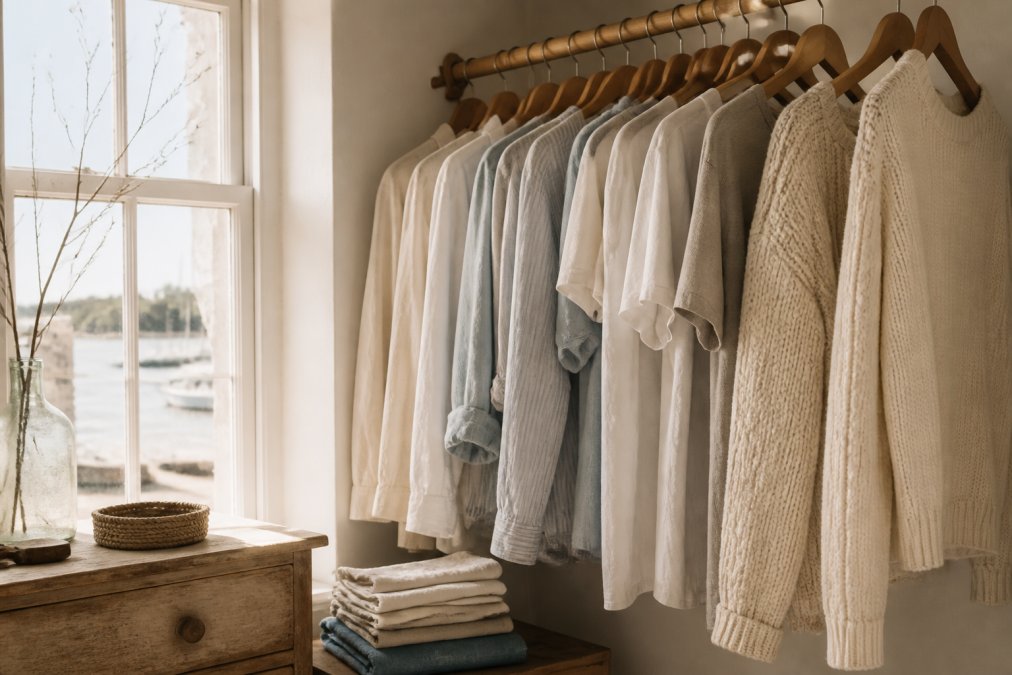
A coastal capsule wardrobe is a small, coordinated set of garments that mix freely, so every piece pairs with every other piece. For coastal living, that means breathable textiles, soft neutrals, and a relaxed silhouette that moves from the sand to a seaside lunch without a costume change.
Key Pieces to Own
Build the base with these:
- A garment-dyed heavyweight tee that softens with each wash
- A lightweight sweater for cool mornings and breezy evenings
- A weather-ready cap for sun and salt air
- One pair of boat shoes that ages well
- A sundress or linen shirt for polished looks
Rhody Life's Bristol Beach Club Lighthouse Graphic T-Shirt is a good anchor piece: heavyweight ring-spun cotton, garment-dyed for a lived-in color, and cut in a relaxed fit. Pair it with the Rhody Local Tide Beach Sweater when the breeze rolls in.


How to Style Vintage Coastal Outfits
Styling vintage coastal outfits is about layering texture, not stacking accessories. Start with one hero piece, keep the palette tight, and let the fabric carry the look. A faded tee under a cream knit, worn with denim shorts and boat shoes, is a complete outfit.
Layering and Accessorizing
Layering is where versatility lives. A lightweight sweater over a tee handles a temperature swing; a cap handles the sun. Keep accessories minimal: one hat, one bag, one pair of shoes that works everywhere.
Sizing and Fit Guide for Vintage Silhouettes
Vintage silhouettes fit differently than modern cuts, and that trips up a lot of buyers. Older patterns ran boxier and shorter; today's vintage-inspired pieces usually keep the relaxed feel but update the proportions. The fix is to measure a garment you already love and compare it to the size chart, not to trust the letter on the tag.
Why Vintage Sizing Runs Different
Three forces explain most of the gap:
- Vanity sizing drift. Ready-to-wear sizes have been renumbered over the decades, so a 1990s medium is often closer to a modern small. A vintage 38 chest can measure like a contemporary 36.
- Pattern grading. Mid-century patterns were drafted for a boxier torso and shorter sleeve, which is why an old oxford can feel wide through the body but short in the arm.
- Fabric behavior. Unsanforized cotton and unwashed linen shrink on first wash. A vintage tee that fits perfectly dry can lose a half inch in the body after one hot cycle.
How to Measure for a Relaxed Coastal Fit
You need three numbers, taken flat on a garment you already own and like:
- Chest, pit to pit. Lay the shirt flat, measure straight across from one armhole seam to the other, then double it.
- Body length. Measure from the highest point of the shoulder (not the collar) straight down to the hem.
- Sleeve, shoulder to hem. Measure from the shoulder seam to the sleeve opening.
Fit Tendencies by Piece
| Piece | Fit Tendency | Sizing Advice |
|---|---|---|
| Graphic tee | Relaxed, pre-shrunk | True to size; size up for oversized |
| Beach sweater | Relaxed beachwear fit | True to size for a clean drape |
| Dad hat | Unstructured, low-profile | Adjustable strap fits most |
| Linen shirt | Boxy through the body | Size down for a trimmer line |
| Vintage denim | High rise, straight leg | Measure waist flat and compare, not the tag |
The Shrinkage Allowance
If a piece is cotton or linen and not labeled pre-shrunk, assume it will lose up to 3 percent of its length on the first hot wash. That is roughly a half inch on a 20-inch body. Buy for the post-wash fit, not the fitting-room fit. Cold wash and low heat minimize the loss; hot water and a hot dryer maximize it.
Care and Maintenance of Vintage Coastal Fabrics
Care is what separates a piece that lasts three summers from one that lasts ten. Most guides stop at 'wash cold,' but the reason vintage coastal fabrics age well, or fall apart, comes down to fiber chemistry, water temperature, and mechanical agitation. Understand those three and you can preserve a garment for years.
Why Natural Fibers Behave the Way They Do
Cotton and linen are cellulose fibers. Heat and agitation cause the fibers to swell, then contract as they dry, which is what produces shrinkage. Dye sits on the surface of garment-dyed pieces rather than soaking through, so abrasion and hot water strip it faster than they would on a piece dyed in the yarn. Wool and wool blends are protein fibers and react to heat and friction by felting, the scales lock together and the garment permanently shrinks.
That is the mechanism behind every rule below.
Washing by Fabric Type
- Garment-dyed cotton tees. Machine wash cold, inside out, on a gentle cycle. Skip the dryer or use low heat. Wash separately for the first two or three cycles; the excess dye will bleed.
- Linen shirts and shorts. Cold wash, gentle cycle, and remove while still damp. Linen creases hard if it dries fully in the machine. Hang or lay flat to finish.
- Knit sweaters. Hand wash or use a mesh bag on the delicate cycle. Never wring. Lay flat to dry on a towel; hanging stretches the shoulders.
- Cotton twill caps. Spot-clean with warm water and a drop of dish soap on a soft-bristled brush. Soaking the whole cap breaks down the brim's stiffener and distorts the crown.
- Vintage denim. Wash inside out, cold, and sparingly. Every wash removes indigo. Spot-clean between wears and air out overnight.
What to Avoid
- Bleach. It attacks cellulose fibers directly and yellows over time.
- Fabric softener. It coats fibers and reduces absorbency, which is the opposite of what you want in breathable coastal fabrics.
- Dry cleaning on garment-dyed pieces. The solvent strips surface dye.
- Hot dryers. The single fastest way to shrink cotton and dull a faded finish.
Storing Vintage Coastal Pieces
Fold knits rather than hanging them; hangers stretch the shoulders over a season. Store in a cool, dry place away from direct sun, which fades dye even on a shelf. Cedar blocks or lavender sachets deter moths without the chemical smell of mothballs. For long-term storage of wool, a breathable cotton garment bag beats plastic, which traps moisture.
Repair Before You Replace
Wash new garment-dyed pieces separately for the first few cycles. The dye can transfer, and a cold wash protects the faded finish you paid for.
The FTC's guidance on textile and care labeling is a useful reference for decoding the symbols on a care tag, especially on vintage pieces where the label may predate current standards.
Budget-Friendly Sourcing for Vintage Coastal Apparel
Sourcing well on a budget comes down to timing and selectivity. Buy off-season, favor pieces that work in three seasons, and treat every purchase as a long-term addition rather than a one-event outfit. A single versatile sweater beats three trend pieces every time.
Where to look:
- End-of-season sales on core colors, not just loud prints
- Local shops and makers where you can check fabric in person
- Small-batch drops that skip the middleman markup
- Secondhand and vintage for genuine retro tees and Y2K bundles
Frequently Asked Questions
What defines the minimalist coastal aesthetic?
The minimalist coastal aesthetic combines clean lines, soft neutrals, and natural textures inspired by the ocean. It emphasizes quality over quantity, with a focus on breathable fabrics like linen and cotton. Key elements include a relaxed silhouette, muted hues such as cream and navy, and timeless pieces that work together effortlessly. This style draws from East Coast inspiration and creates a polished yet laid-back look suitable for everyday wear.
How do you incorporate vintage pieces into a minimalist wardrobe?
Start by selecting vintage-inspired coastal fashion trends that align with your minimalist capsule wardrobe essentials, like a faded graphic tee or a classic linen shirt. Choose pieces with clean lines and neutral colors to maintain a cohesive look. Limit vintage items to one or two per outfit to avoid visual clutter. Focus on quality fabrics and timeless silhouettes that blend seamlessly with modern staples, ensuring versatility and a polished appearance.
What are the essential colors for a coastal minimalist style?
Stick to a palette of soft neutrals like cream, beige, white, and light gray, complemented by muted blues and greens reminiscent of the sea. These colors create a calming, cohesive look that embodies coastal chic. Avoid bright or neon shades, as they can disrupt the minimalist vibe. Incorporating faded colors from vintage pieces adds depth while maintaining the understated elegance of the style.
What fabrics are best for vintage-inspired coastal apparel?
Natural fibers such as cotton and linen are ideal for vintage-inspired coastal apparel. They offer breathability and comfort, perfect for layering. Vintage pieces often feature these materials, which age well and develop character over time.
Building a wardrobe that feels both timeless and personal takes restraint, and it takes pieces worth keeping. Rhody Life makes that easier with vintage-inspired coastal apparel built for Ocean State living: high-quality gear that connects you to Rhode Island heritage, commemorative Bristol 250th merchandise, and sticker sales that support local shoreline access. If you want a closet that looks intentional and lasts, get started with Rhody Life and wear your local pride well.