
Table of Contents
- Why Spotting Quality Apparel Matters Before You Buy
- Understanding High Quality Fabric Types and What to Feel For
- Clothing Fabric Weight GSM Explained: Why It Matters
- Garment Stitching and Seam Quality: The Construction Checklist
- How to Check Clothing Quality Online: What to Look For
- Fit, Silhouette, and Garment Structure
- In-Store Inspection Checklist: Your Step-by-Step Guide
- Long-Term Value: Care, Shrinkage, and Cost Per Wear
- Frequently Asked Questions
Last Updated: October 18, 2026
Why Spotting Quality Apparel Matters Before You Buy
The difference between clothing that lasts a season and clothing that lasts years often comes down to one thing: knowing how to spot quality apparel before you hand over your money. At Rhody Life, we've watched customers make purchase decisions based on price alone, only to return disappointed weeks later when seams split or fabric pills.

Quality apparel holds its shape, resists pilling, and maintains its color through repeated wear and washing. Poor-quality pieces fall apart quickly. The good news is that spotting the difference doesn't require expert training. It requires knowing what to look for and where to look for it.
This guide walks you through the practical checks that separate well-made clothing from fast-fashion throwaway pieces. You'll learn to evaluate fabric by touch and sight, inspect stitching and seams, and assess fit and construction details.
Understanding High Quality Fabric Types and What to Feel For
The fabric itself is where quality begins. Feel matters as much as appearance. Run your fingers across the material. Quality fabric feels smooth and substantial. It has weight and density. Cheap fabric feels thin, flimsy, or overly slick.
Natural Fibers vs. Synthetic Blends
Natural fibers like cotton, linen, and wool tend to feel better and last longer than pure synthetics. Cotton breathes, wicks moisture, and softens with wear. Linen is durable and cool. Wool provides warmth and natural elasticity.
Synthetic fibers like polyester add durability and reduce wrinkles, but they can trap heat and feel plasticky against skin. The best apparel often blends natural and synthetic fibers to combine the benefits of each.
Check the fiber content tag before you buy. Quality brands list exact percentages. If the tag says "cotton blend" without percentages, move on. Transparency matters.
Fabric Weight and Durability
Heavier fabric generally means better quality and longer wear. Lightweight fabric tears more easily and wears thin faster. Feel the weight in your hands. Does it feel substantial or insubstantial?
Fabric weight is measured in ounces per yard or grams per square meter. Our Bristol Beach Club Lighthouse Graphic T-Shirt uses 100% ring-spun cotton at 6.1 ounces per yard, which is the sweet spot for durability and comfort.

Thicker fabric resists pilling, holds dye better, and maintains its shape after washing. It also feels more premium. When you hold a quality shirt, you should feel the difference immediately.
Clothing Fabric Weight GSM Explained: Why It Matters
Fabric weight, measured in grams per square meter (GSM), tells you how dense and durable a garment will be. Higher GSM means heavier, more durable fabric.
GSM matters because it directly impacts how long clothing lasts. A 200 GSM shirt feels thin and fragile. A 300 GSM shirt feels substantial and built to last.
Here's why this matters in practice:
- Lightweight (150-200 GSM): Thin, prone to tearing, wears out quickly
- Standard (200-250 GSM): Acceptable for basic wear, moderate durability
- Quality (250-350 GSM): Substantial, durable, resists pilling and tearing
- Heavy (350+ GSM): Very durable, best for outerwear and structured pieces
Our Rhody Life East Bay Stitched Fleece Mock-Neck Crew Sweatshirt uses 10.3 ounces per yard (approximately 350 GSM), which explains why it feels so solid and holds its shape through multiple washes.
When you're shopping, ask for the GSM or weight. Quality retailers provide this information. If they don't, that's a red flag.
Garment Stitching and Seam Quality: The Construction Checklist
Stitching quality separates high-end apparel from disposable clothing. Poor stitching unravels. Good stitching holds for years.
Stitch Density and Straight Lines
Examine the seams closely. Run your finger along them. Quality seams are tight and even. Stitches are small and close together. Loose, wide stitches indicate rushed manufacturing.
Count the stitches per inch if you can. Quality apparel has at least 8-10 stitches per inch. Fast-fashion pieces often have 4-6 stitches per inch, which means the seam will fail sooner under stress.
Look for straight lines. Wavy, crooked, or uneven stitching indicates poor quality control. The thread should match the fabric color or be intentionally contrasting for design purposes.
Seam Allowance and Reinforcement
Seam allowance is the distance between the edge of the fabric and the stitching line. Larger seam allowances mean the garment can be altered or repaired. They also indicate better construction.
Quality apparel has seam allowances of at least 0.5 inches. Budget apparel often uses 0.25 inches or less. Check this by looking at the inside of the garment.
Reinforced seams are stitched twice or use thicker thread. Look for seams that are reinforced at stress points like armholes, crotch seams, and hem lines. Double-stitched hems indicate quality construction.
Loose Threads and Finishing Details
Pull gently on seams. Loose threads indicate poor quality control. A few loose threads are normal, but excessive loose threads suggest rushed manufacturing.
Examine the hems. Quality hems are folded neatly and stitched evenly. Crooked or uneven hems are a sign of poor workmanship. Check buttonholes. They should be reinforced and neatly finished. Sloppy buttonholes indicate low-quality construction.
Look at collar and cuff finishing. Quality apparel has smooth, even collar edges and reinforced cuffs. Cheap apparel has wrinkled, uneven, or poorly attached collars and cuffs.
How to Check Clothing Quality Online: What to Look For
Shopping online makes it harder to feel fabric or inspect stitching in person. But you can still spot quality apparel by examining product details carefully.
Product Photography and Detail Shots
Quality retailers provide multiple photos from different angles. Look for close-up shots of seams, stitching, and fabric texture. If the product photos are blurry or show only the front of the garment, that's a red flag.
Examine the photos carefully. Can you see stitch density? Can you see the texture of the fabric? Quality retailers make these details visible because they're proud of their construction.
Look at how the garment fits on the model. Does it drape well or hang awkwardly? Quality fabric drapes smoothly. Cheap fabric bunches or wrinkles oddly.
Fiber Content and Care Instructions
Check the fiber content percentage. Quality brands list exact percentages. Look for natural fiber content of at least 50%. The remaining percentage should be durable synthetics like polyester, not cheap fillers.
Rhody Life East Bay Stitched Fleece Mock-Neck Crew Sweatshirt →
Read the care instructions carefully. Quality apparel can handle regular machine washing. Garments requiring hand washing or dry cleaning only may be poorly constructed or use delicate fibers that don't suit everyday wear.
Detailed care instructions also indicate quality. The brand cares enough to provide specific guidance. Generic instructions like "machine wash" without temperature or cycle specifications suggest lower quality.
Fit, Silhouette, and Garment Structure
Quality apparel fits well and maintains its shape. Poor-quality apparel stretches out, sags, or wrinkles excessively after a few wears.
Examine how the garment hangs on the model. Does it follow the body's contours smoothly?
Check the shoulder seams.
Look at the neckline. Is it even and symmetrical? Does it sit at the right height?
Examine armholes. Are they proportionate to the body? Too large and the garment looks cheap. Too small and it restricts movement.
Sleeves should hang straight and end at the right length. Twisted or bunched sleeves indicate poor construction.
In-Store Inspection Checklist: Your Step-by-Step Guide
When you're in a store, use this five-step system to evaluate any garment quickly and thoroughly.
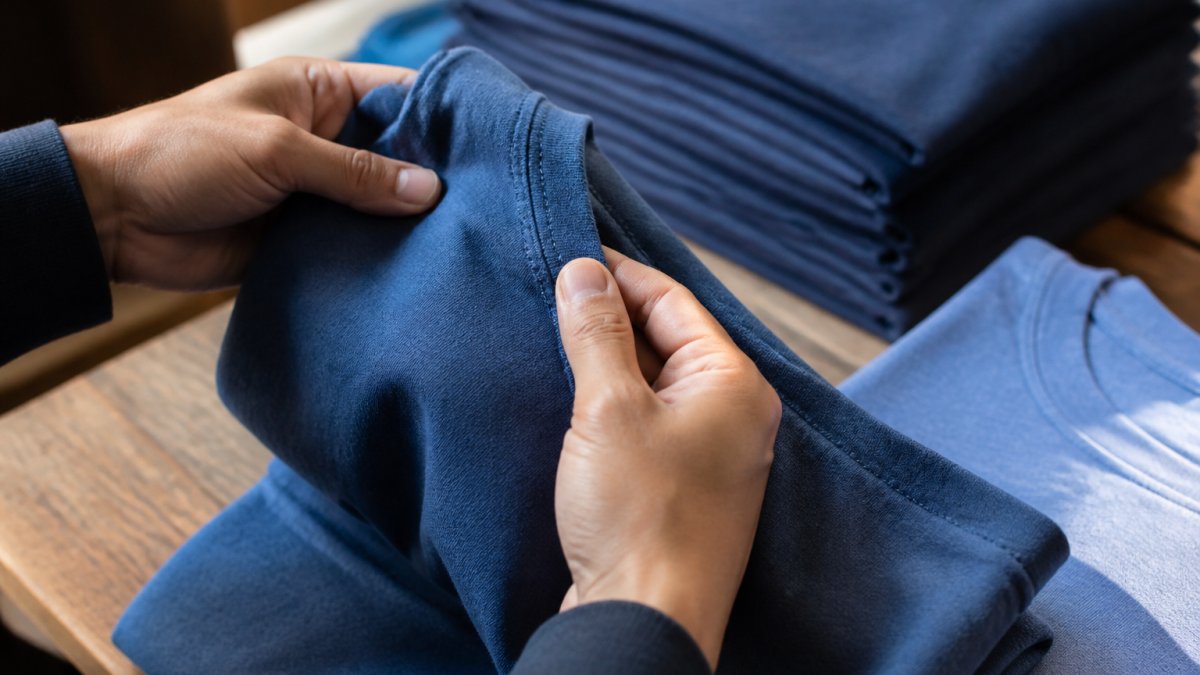
Step 1: Feel the Fabric
Pick up the garment and hold it in your hands. Feel the weight. Does it feel substantial or flimsy? Run your fingers across the surface. Is it smooth or rough? Quality fabric feels soft and has good weight.
Check for pilling. Rub the fabric gently between your fingers. If fibers ball up or fuzz appears immediately, the fabric is low-quality and will pill after a few wears.
Step 2: Examine Seams and Stitching
Turn the garment inside out. Look at the seams closely. Are the stitches small and tight? Count stitches per inch if you can. Look for at least 8-10 stitches per inch.
Check that seams are straight and even. Look for double stitching at stress points. Feel the seam allowance. There should be a visible margin of fabric between the edge and the stitching.
Step 3: Check for Pilling and Loose Threads
Inspect the garment carefully for existing pilling or fuzziness. Rub the fabric gently. Quality apparel resists pilling. Cheap apparel pills easily.
Look for loose threads hanging from seams or hems. A few loose threads are normal, but excessive loose threads indicate poor quality control.
Step 4: Assess Fit and Drape
Put the garment on and check how it fits. Does it follow your body's contours? Quality apparel drapes well and maintains its shape. Poor-quality apparel sags or clings awkwardly.
Move around in the garment. Can you move freely? Do the seams feel comfortable? Quality construction doesn't restrict movement.
Check the shoulder seams. Do they sit at your natural shoulders? Check the sleeve length. Does it end at the right spot? Check the hem. Is it even all around?
Step 5: Review Fiber Content and Care Instructions
Check the fiber content tag. Look for natural fibers and exact percentages. Avoid garments with vague descriptions like "cotton blend" without percentages.
Read the care instructions. Quality apparel can handle regular machine washing. Check the recommended temperature and cycle. More detailed instructions indicate better quality.
Long-Term Value: Care, Shrinkage, and Cost Per Wear
Quality apparel costs more upfront, but the long-term value is better.
Calculate cost per wear. A quality $50 shirt worn 100 times costs $0.50 per wear.
Proper care extends garment lifespan significantly. Follow care instructions exactly. Wash in cold water. Use gentle cycles. Avoid the dryer when possible.
Check shrinkage information. Our Rhody Life Wrack Line Tee uses pre-shrunk fabric, so it maintains its fit wash after wash.

Understanding fiber content helps you predict how a garment will age. Natural fibers soften and improve with wear.
Spotting quality apparel comes down to paying attention to details that most people overlook. Start with our Bristol Beach Club Lighthouse Graphic T-Shirt or East Bay Stitched Fleece Mock-Neck Crew Sweatshirt to see what quality construction actually feels like, and you'll never settle for less again.
Frequently Asked Questions
How can you tell if fabric is high quality?
High-quality fabric feels substantial and consistent when you touch it. Check the weight, heavier doesn't always mean better, but flimsy, thin fabric often indicates lower quality. Look at the fiber content: 100% natural fibers like cotton or linen, or well-constructed blends like 60% cotton with 40% polyester, tend to perform better than mostly synthetic fabrics. Run your fingers along the surface to spot pilling, and examine seams for tight, even stitching with no loose threads.
What does 400 GSM mean in fabric?
GSM stands for grams per square meter and measures fabric weight and density. A 400 GSM fabric weighs 400 grams per square meter of material. Higher GSM generally means thicker, more durable fabric that resists wear and holds its shape better. For t-shirts, 150-200 GSM is typical; for sweatshirts like the Rhody Life East Bay Fleece at 350 GSM (10.3 oz/yd²), the heavier weight provides warmth, structure, and longevity. Lighter fabrics (under 150 GSM) feel delicate and wear out faster.
What should you check to tell if clothing is well made?
Start with seams: they should be straight, tight, and even with no gaps or puckering. Count the stitches per inch, at least 8-10 stitches per inch indicates good construction. Check for loose threads, fraying, or unfinished edges. Examine buttonholes, zippers, and hems for reinforcement and neat finishing. Feel the fabric for consistent weight and texture. Look at how the garment drapes and whether the fit is intentional and balanced. Well-made clothing has no visible defects, precise stitching, and quality hardware.
Is a 60% cotton, 40% polyester blend good quality?
Yes, a 60% cotton, 40% polyester blend can be excellent quality. Cotton provides breathability and comfort, while polyester adds durability and wrinkle resistance. This ratio balances the strengths of both fibers. Quality depends on other factors too: yarn twist, fabric weight, stitching density, and seam construction matter more than fiber ratio alone. Many premium brands use similar blends. What makes it good quality is how the fibers are processed, how tightly the yarn is twisted, and how well the garment is constructed.