
Quick Summary
The coastal apparel essentials for Rhode Island winters are a wind-resistant outer shell, wool or fleece mid-layers that stay warm when damp, layered clothing for changing conditions, insulated headwear, traction footwear, lifestyle knitwear, and proper care for salt and humidity. Start with the shell and mid-layer, since they cover most coastal conditions.
- Rhode Island winters are wetter and windier than inland New England, so the coast takes the worst of it.
- Cotton holds moisture and stays cold, so wool and fleece are the better mid-layers for coastal walks.
- Dress for the windiest part of your route and unzip before stepping out to avoid sweating.
- Deep lug soles with softer rubber grip wet rock and ice better than flat fashion soles.
- Follow care labels and avoid salt residue, since salt and humidity wear out clothing faster than expected.
Table of Contents
- 1. Wind-Resistant Outer Shell for Coastal Gusts
- 2. Wool and Fleece Mid-Layers That Hold Warmth When Damp
- 3. Layering Tips for Coastal Winter Weather
- 4. Insulated Headwear and Hats That Shed Sea Mist
- 5. Footwear for Slush, Salt and Shoreline Walks
- 6. Coastal Lifestyle Clothing for Men: Sweaters and Everyday Layers
- 7. Caring for Winter Gear So It Lasts Through Salt and Humidity
- Building Your Rhode Island Winter Wardrobe This Season
- Frequently Asked Questions
7 Coastal Apparel Essentials for Rhode Island Winters
Last Updated: November 9, 2026
1. Wind-Resistant Outer Shell for Coastal Gusts
Rhode Island winters are wetter and windier than inland New England, and the coast takes the worst of it, which is why coastal apparel essentials start with a good outer layer. A windproof outer layer is the first piece to get right, because a damp breeze off Narragansett Bay can strip warmth faster than the cold air alone. At Rhody Life, we think of the outer shell as the piece that makes everything underneath work.
Look for a shell that blocks wind and sheds light moisture. Water-resistant fabrics handle sea mist and drizzle, while fully waterproof shells are better suited to long exposure. Pay attention to the hood, cuffs and hem, since gusts find every gap in a loose fit.
Watch out: a shell that feels warm indoors can still leave you chilled after twenty minutes on an exposed boardwalk. Test it outdoors before you commit to a long walk.
2. Wool and Fleece Mid-Layers That Hold Warmth When Damp
Cotton is the wrong mid-layer for a coastal winter because it holds moisture and stays cold against the skin. Fleece and wool keep their insulating value even when they get damp, which is exactly what happens on a foggy shoreline walk.
Our Rhody Life East Bay Stitched Fleece Mock-Neck Crew Sweatshirt is a practical example, priced at $68.00. Its fabric is 57.4% polyester, 36.8% cotton and 5.8% other fibers, at 10.3 oz/yd², and it has a mock-neck collar.

3. Layering Tips for Coastal Winter Weather
Layering works because each layer traps a different kind of heat, but coastal winters break the standard three-layer formula in one specific way: conditions change faster and more locally than inland cold. A morning on an exposed shoreline can feel a full season colder than a sheltered downtown street a few miles away, and the gap widens when wind comes off the water. The layering system that works here is built for quick adjustment, not maximum warmth.
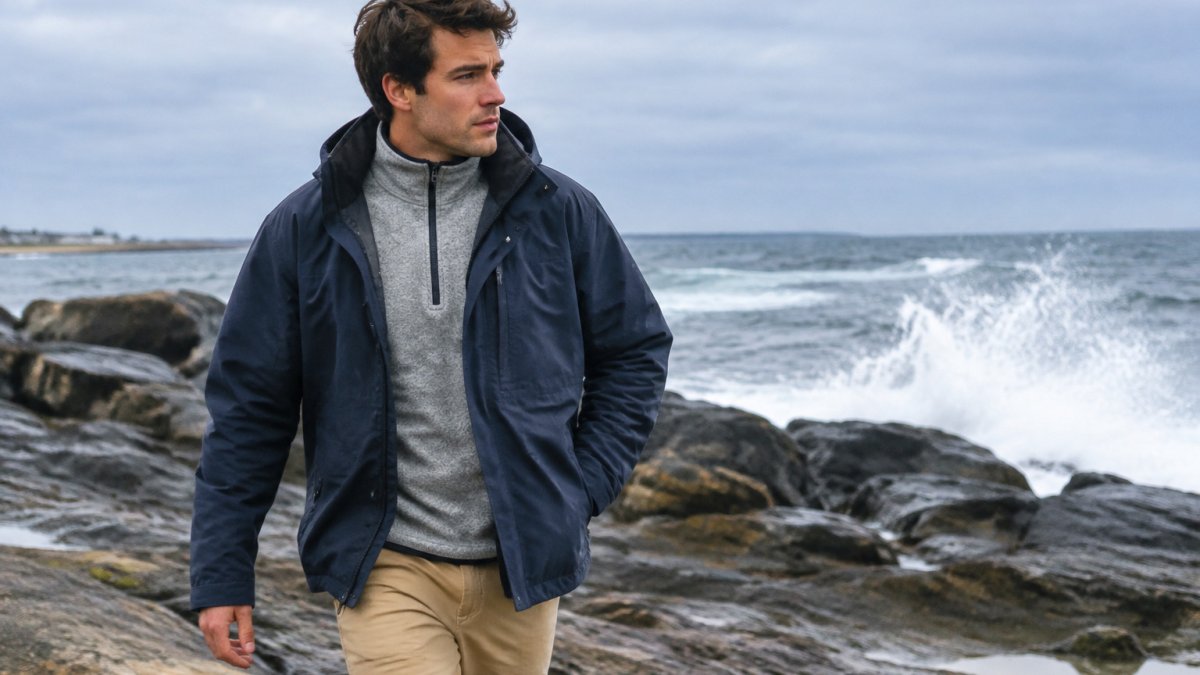
The base layer moves moisture away from the skin. A merino or synthetic base beats cotton because cotton holds sweat and stays cold against the skin once you stop moving. The mid-layer insulates, and wool or fleece keeps its insulating value even when damp, which matters on a foggy shoreline walk. The outer shell blocks wind and sheds light moisture.
A useful habit for coastal layering is adjusting as conditions change. Because the wind chill on an exposed boardwalk can be far harsher than the temperature suggests, dress for the windiest part of your route and plan to remove a layer the moment you turn inland or step indoors. Unzip before you step out rather than after, so you do not sweat through your base layer and then chill when you stop. Keep the layers loose enough that air sits between them, since that trapped air does most of the insulating work.
A practical coastal setup is a fitted base layer, a fleece or wool mid-layer, and a windproof shell, with a packable extra mid-layer for the shoreline leg of the trip. That way you can strip down for a sheltered walk and add insulation back before you reach the water.
Watch out: overdressing for the coldest moment of the route and then sweating through your base layer is the most common layering mistake on coastal winter walks, because the chill hits hardest once you slow down.
Coastal conditions change quickly, so this layering setup is built for easy adjustment.
| Layer | Role | Key point |
|---|---|---|
| Base layer | Moves moisture away from skin | Merino or synthetic, not cotton |
| Mid-layer | Insulates | Wool or fleece stays warm when damp |
| Outer shell | Blocks wind, sheds light moisture | Dress for the windiest part of the route |
| Extra mid-layer | Packable added warmth | Carry it for the shoreline leg |
| Unzip early | Prevents sweating | Unzip before stepping out, not after |
4. Insulated Headwear and Hats That Shed Sea Mist
A large share of body heat escapes through the head and neck, which makes headwear more useful in winter than many people expect. Coastal humidity also means a hat should handle damp air without turning soggy.
Our Bristol 250th Hope Street Distressed Dad Hat - Khaki is a low-profile option made from 100% preshrunk cotton twill, with an adjustable hook-and-loop strap. It is priced at $35.00. The Local Tide Organic Cotton Baseball Cap is made from 100% organic cotton and costs $35.00.
5. Footwear for Slush, Salt and Shoreline Walks
Wet sand, road salt and slush are hard on footwear, and the coast adds a specific hazard most inland guides skip: black ice on shaded boardwalk planks and wet rock at low tide. The right boot has to handle three separate problems, water intrusion, traction, and salt damage, and no single feature solves all three.
Start with the sole. A deep lug pattern with a softer rubber compound grips wet rock and packed snow better than a flat fashion sole, and a heel brake helps on downhill stretches of the Cliff Walk where ice lingers in the shade. Look for a sole that stays flexible in cold temperatures; hard rubber stiffens below freezing and loses grip exactly when you need it. If you walk icy paths regularly, a pair of pull-on traction cleats that stretch over the boot adds a mechanical bite that no sole pattern matches.
For the upper, distinguish waterproof from water-resistant. A fully waterproof membrane keeps slush out during a long walk but traps sweat, so pair it with a moisture-wicking sock. A water-resistant leather or treated synthetic sheds sea mist and light slush and breathes better for shorter errands. Untreated canvas is the wrong choice near the shore because salt residue dries it stiff and leaves white bloom that is hard to remove.
Fit matters as much as material. Leave room for a thick wool sock without cramping the toes, since a tight boot restricts circulation and makes cold feet worse. Rinse salt residue off after walks, dry boots away from direct heat, and re-treat leather with a conditioner made for salt exposure. Keep at least one pair you do not mind getting wet, so a sudden storm does not ruin your better boots.
Watch out: a boot that feels grippy on dry pavement can slide on wet granite or painted boardwalk planks, so test traction on a wet surface before trusting it on an exposed shoreline path.
6. Coastal Lifestyle Clothing for Men: Sweaters and Everyday Layers
Men who live near the water often want clothing that moves easily from a harbor walk to a casual dinner. A lightweight knit sweater is a flexible choice because it layers under a jacket and looks right on its own.
The Rhody Local Tide Beach Sweater is a cotton-blend knit with a relaxed coastal fit, priced at $78.00, with a cream body and navy trim. For a casual layer, the Rhody Life Wrack Line Tee is 100% ring-spun cotton and costs $33.00.


7. Caring for Winter Gear So It Lasts Through Salt and Humidity
Salt and humidity wear out clothing faster than most people expect.
Follow the care label on every item. For example, the East Bay fleece should be machine washed at 30°C on a gentle cycle, tumble dried low, and never dry cleaned. Hats with cotton twill are best cleaned by spot-treating with warm water and dish soap.
Our guide on how to spot quality apparel explains which construction details help gear hold up through repeated washing. A wardrobe built around a few well-made pieces will outlast one filled with cheap, short-lived items.
Building Your Rhode Island Winter Wardrobe This Season
Start with the outer shell and a good mid-layer, since those two cover most coastal conditions. Add headwear and a sweater once the basics are in place. Our durable coastal clothing for outdoor activities guide goes deeper on choosing gear for the activities you do most.
Frequently Asked Questions
How do you dress for a coastal winter in the Northeast?
Dress in three layers: a moisture-wicking or fleece base, a warm mid-layer such as a wool or fleece mock-neck, and a wind-resistant outer shell. Coastal winters in Rhode Island bring damp air and gusts off the water, so the shell matters more than bulk. Add a hat that covers the ears, water-resistant footwear, and gloves you can still use with a phone. Adjust by removing the mid-layer indoors rather than under-dressing outside.
What are the best fabrics for staying warm near the ocean?
Wool and fleece hold their insulation when they get damp, which makes them the most reliable choices for coastal air. Cotton absorbs moisture and stays cold, so avoid it as a base layer. Synthetic blends with a brushed fleece face are a practical middle ground at a lower price. The Rhody Life East Bay Stitched Fleece Mock-Neck Crew Sweatshirt ($68.00) is a 57.4% polyester, 36.8% cotton blend at 10.3 oz/yd².
Is a heavy parka necessary for winter in the Ocean State?
Usually not. Rhode Island winters are more often wet and windy than deeply cold, so a heavy parka can cause overheating once you start walking. A wind-resistant, water-resistant shell over a warm mid-layer covers most conditions. Reserve a heavier coat for sustained cold snaps or long outdoor stretches with no movement. Layering gives you more control than one bulky coat.
What footwear is best for winter walks along the shoreline?
Choose boots with a water-resistant upper and a rubber outsole with grip, since wet rock, sand and slush are the main hazards on coastal walks. Keep the fit roomy enough for a thin wool sock. Dry socks matter as much as the boot, so bring a spare pair for longer outings.
