
Last Updated: November 5, 2026
Quick Summary
Rhode Island maritime heritage matters today because the coast it describes is physically changing, with coastal erosion, stronger storm surge, and sea-level rise threatening archaeological sites, historic structures, and working waterfronts at once. It also sustains tourism, fishing, and marine trades that depend on authentic working harbors.
- Rhode Island has roughly 400 miles of coastline for a landmass you can drive across in under an hour.
- In 1772, Rhode Islanders burned the British revenue schooner Gaspee in Narragansett Bay.
- Give Newport a full day, Bristol a half day, and treat Galilee as a lunch stop.
- The Rhode Island Antiquities Act makes removing artifacts without a permit illegal.
- Documentation, not recovery, is the default in underwater archaeology.
Table of Contents
- What Maritime Heritage Means for the Ocean State
- How Rhode Island Maritime History Shaped Independence and Trade
- Rhode Island Maritime Heritage Sites You Can Visit
- Block Island Submerged Cultural Sites and Underwater Archaeology
- Indigenous Seafaring and the Communities the Sea Built
- Why Maritime Heritage Matters Today: Climate Risk and Coastal Identity
- How to Experience and Support Rhode Island's Maritime Heritage
- Wear Your Shoreline Pride with Rhody Life
- Frequently Asked Questions
What Maritime Heritage Means for the Ocean State
Rhode Island maritime heritage is the record of how salt water shaped the state's work, law, and identity, from Narragansett Bay wharves to Block Island's shoals.
The state's nickname, the Ocean State, reflects its coastline. Rhode Island has roughly 400 miles of coastline for a landmass you can drive across in under an hour, according to the Rhode Island Coastal Resources Management Program.
From Narragansett Bay to the open Atlantic
Narragansett Bay is the state's front yard, and its sheltered waters helped make Newport and Providence important ports. The bay funnels into Rhode Island Sound, and past Block Island the water opens into the Atlantic proper.
That geography created two different maritime cultures. Bay towns worked the shallows: quahogs, oysters, eelgrass flats, and short runs to market. The outer coast and the islands worked the open water, where weather is less forgiving and the boats are built accordingly.
How Rhode Island Maritime History Shaped Independence and Trade
Rhode Island maritime history runs straight through the American Revolution, and not always in a flattering light. The colony's merchant fleet took part in the triangular trade, a history that is worth sitting with rather than skimming past. The same ships and sailors later became the backbone of new resistance on the water.
Colonial ports, privateers and the Revolution
Newport was an important port in the colonial era. A well-known action came in 1772, when a group of Rhode Islanders burned the British revenue schooner Gaspee in Narragansett Bay, an event documented by the Gaspee Days Committee and state historical records and often cited as an early spark of the independence movement.
The war also brought occupation and economic collapse to Newport. The city's recovery took decades, and it reshaped which towns held maritime power afterward.
Shipbuilding, fishing and the working waterfront
Boatbuilding became a Rhode Island specialty, and it never fully left. Yards turned out everything from small work skiffs to larger vessels, and the state's boat shops still repair and build today.
What most guides miss is how much of that infrastructure is still operational rather than commemorative. Many docks remain in working use. Fish is often landed and sold locally.
Rhode Island Maritime Heritage Sites You Can Visit
Rhode Island maritime heritage sites range from museums and preserved vessels to lighthouses and working harbors you can simply walk up to. The best starting points are concentrated around Newport, Bristol, and the southern coast, but the depth is in the specifics, so here is what each cluster actually offers.
Newport: the deepest single concentration
Newport is where most visitors should start. The Newport Historical Society holds colonial-era manuscripts, account books, and waterfront records that document the port's role in the Atlantic trade. The Museum of Newport History at the Brick Market interprets that mercantile past in the building where it happened. Down on the harbor, the working waterfront still runs alongside the tourist one, and the Newport Maritime Center serves as a landing point for boaters and a gateway to the harbor's history.
Check local schedules before assuming a vessel will be in port.
Bristol: working harbor and Revolutionary memory
Bristol pairs a genuinely active harbor with one of the state's most intact Revolutionary-era waterfronts. The Bristol Historical & Preservation Society maintains archives and walking-tour material for the colonial streets, and the harbor itself remains a working port with commercial fishing and boatyard activity. The town's 250th-anniversary programming has made the Revolutionary history unusually accessible in recent seasons.
South County and Galilee: the working coast
Galilee is a working commercial fishing port rather than a museum. The docks at Galilee land squid, scallops, groundfish, and lobster, and the fish markets and restaurants along the waterfront sell what comes off the boats. That working character is the heritage. Nearby, the South County History Center in Kingston holds archival material on the region's maritime and agricultural past.
Block Island: offshore rhythm and lighthouses
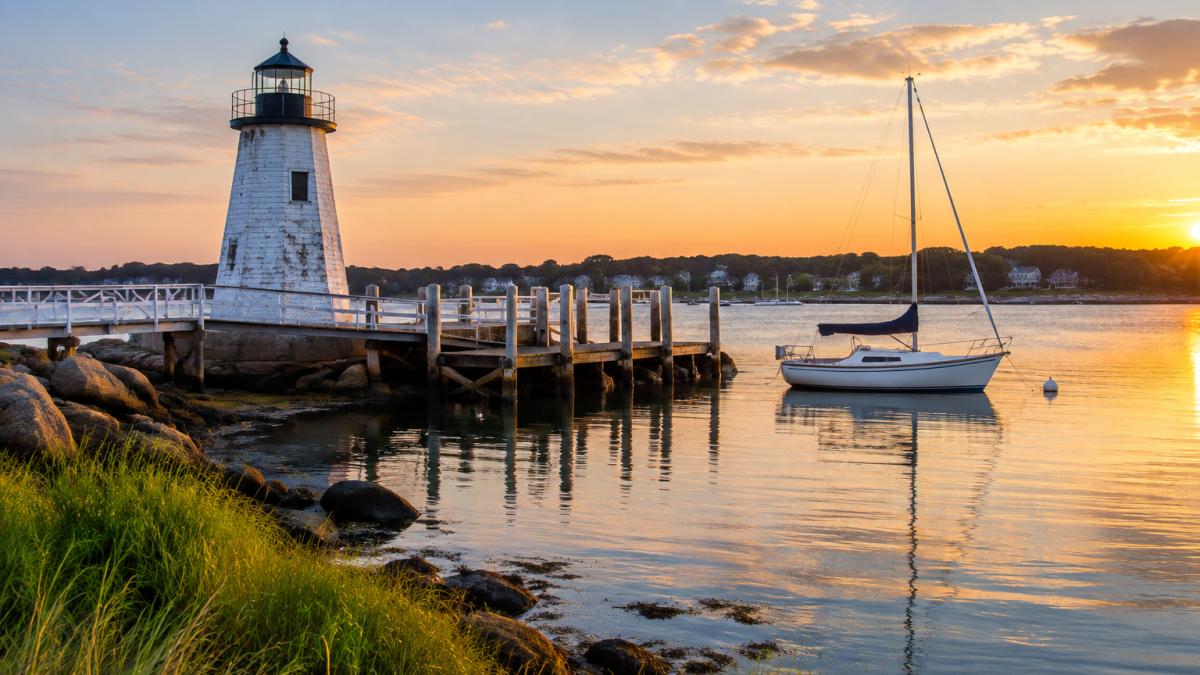
Block Island is a different maritime world. The Block Island Historical Society maintains a museum and archives on the island's farming, fishing, and rescue history. The island's lighthouses, including the Southeast Light and North Light, are notable landmarks, and the bluffs at Mohegan Bluffs and the bluffs at Mohegan Bluffs show the coastal erosion that threatens heritage sites directly.
What to actually do with a day
A practical pattern most visitors find works well: give Newport a full day for museum and waterfront, give Bristol a half day for the harbor and colonial streets, and treat Galilee as a lunch stop where you buy fish rather than a sightseeing destination.
Small historical society museums may keep limited seasonal hours, so confirm opening times before you plan a trip.
For a deeper look at which coastal towns deserve a full day rather than a drive-by, see which coastal heritage towns in RI are worth visiting. If you're bringing kids, our list of family-friendly Rhode Island heritage sites will save you a lot of guessing.
Block Island Submerged Cultural Sites and Underwater Archaeology
Block Island submerged cultural sites are among the state's least visible but most significant heritage assets. The waters around the island have claimed vessels for centuries, and those wrecks sit within a formal regulatory framework rather than a free-for-all.
What is actually down there
The waters around Block Island have accumulated wreck material over time. The state's submerged archaeological record includes shipwrecks, ballast piles, and scattered artifacts, and the Rhode Island Historical Preservation and Heritage Commission maintains the archaeological records and reviews projects that could disturb submerged resources. The commission's Rhode Island Marine Archaeology Program coordinates survey and documentation work in state waters.
Usual Suspects Canvas Art - Narragansett Bay's Most Wanted →
The rules that govern wreck sites
Three layers of law matter. In state waters, the Rhode Island Antiquities Act gives the state authority over archaeological sites on state-owned submerged land, and removing artifacts without a permit is illegal. On the federal side, the Abandoned Shipwreck Act of 1987 gives states title to most abandoned wrecks in state waters, while the National Historic Preservation Act triggers review when federal permits or funding are involved. The NOAA Office of National Marine Sanctuaries and the Naval History and Heritage Command also have interests in federally owned and military wrecks.
A common pattern is that divers assume a wreck is fair game because it is old. It is not. Age does not transfer ownership, and the state's position is that context and documentation carry the value, not salvage.
How underwater archaeology actually works
Practitioners typically begin with archival research, then remote sensing such as side-scan sonar and magnetometry, then diver or ROV ground-truthing, and only then excavation if the site is threatened. The Advisory Council on Underwater Archaeology publishes guidance on ethics and practice that most state programs follow.
Watch out: artifact hunting, even of a single object, can destroy the spatial context that gives a wreck its archaeological value, and it may violate state permit requirements.
Why Block Island specifically matters
The island's position at the mouth of the sound has long placed it near vessels caught in weather. The Block Island Historical Society holds material on wrecks and rescues, and the state's archaeological records are the place to start for site-level information.
A common mistake is treating wreck sites as treasure. They are archaeological sites. Their value lies in context and documentation.
Indigenous Seafaring and the Communities the Sea Built
Before any European ship entered the bay, the Narragansett and neighboring peoples were already expert watermen. They built dugout and plank canoes, fished the bay and coastal ponds, harvested shellfish, and moved between islands on water rather than roads.
That history is not a footnote. It is the foundation of the state's maritime identity, and it survives in place names, in continuing tribal communities, and in ongoing fishing and shoreline traditions.
Why Maritime Heritage Matters Today: Climate Risk and Coastal Identity
Maritime heritage matters today because the coast it describes is physically changing.
The social side matters just as much. Rhode Island's coastal towns depend on tourism, fishing, and marine trades, and those industries sell authenticity that comes directly from heritage.
There is a practical edge here too. Our shoreline access support page explains how to get involved locally.
How to Experience and Support Rhode Island's Maritime Heritage
Supporting Rhode Island maritime heritage does not require a degree in archaeology. It requires showing up and spending locally.
- Visit museums and historic sites, and pay the admission
- Eat at working harbors and buy landed seafood
- Respect posted rules at archaeological and dune sites
If Revolution-era history is your thing, the Bristol 250th anniversary programming raises a fair question: is it worth the trip? Short answer, yes, especially if you pair it with the working waterfront.
Wear Your Shoreline Pride with Rhody Life
Heritage you can wear is heritage you talk about. That is the idea behind the Rhody Life Wrack Line Tee, which names the legal boundary of public shoreline access in Rhode Island and supports the cause behind it.

Our lineup is built for people who actually use the coast:
| Product | Price | Best for |
|---|---|---|
| Rhody Life Wrack Line Tee | $33.00 | Shoreline access supporters, beach walks |
| Bristol Beach Club Lighthouse Graphic T-Shirt | $28.00 | Everyday wear, harbor days |
| Local Tide Organic Cotton Baseball Cap | $35.00 | Sun coverage, morning walks |
| Usual Suspects Canvas Art | $29.00 | Boat house and coastal walls |
Best for: Rhode Islanders and expats who want gear tied to real local heritage. Skip if: you want plain, unbranded basics with no local story.


Frequently Asked Questions
Why is Rhode Island's maritime heritage important?
Rhode Island's economy, identity and coastline were built on the water. Narragansett Bay and the Atlantic supported colonial trade, shipbuilding, fishing and naval activity that shaped the state's towns and workforce. That Rhode Island maritime heritage also survives in historic vessels, archives, photographs and archaeological sites that researchers still study. Understanding it helps residents protect coastal places, interpret local history accurately and keep the working waterfront alive for future generations.
What are some important Rhode Island maritime heritage sites to visit?
Newport's harbor and colonial waterfront and Bristol's historic waterfront are good places to start. Museums and historical societies around Narragansett Bay may hold material from the seafaring era. Many sites sit along public shoreline, so you can combine a walk with a history stop. Check each site's hours before you go, since small volunteer-run museums often keep seasonal schedules.
How does maritime archaeology help preserve coastal history?
Maritime archaeology documents shipwrecks, submerged cultural resources and waterfront structures before erosion, storms or development destroy them. Researchers generally identify and record underwater sites before they are damaged. That work turns scattered debris into a readable record of trade, navigation and daily life at sea. Responsible archaeology also discourages looting, since removing objects from a wreck destroys the context that gives them meaning.
How can people help preserve Rhode Island's maritime heritage?
Start local: join a shoreline cleanup, volunteer with a historical society, or attend public archaeology events where you can learn how sites are documented. Report artifacts you find rather than pocketing them, and stay off fragile dunes and eroding banks. Supporting businesses that fund shoreline access helps too. Rhody Life, for example, contributes to local shoreline access through sticker sales. Small, repeated actions from coastal communities keep both the physical shore and its stories available to the public.
The coast is changing, and the record of who lived and worked on it is changing with it. Rhody Life builds vintage-inspired coastal apparel that keeps that story visible, from specialized Bristol 250th anniversary merchandise to the Wrack Line Tee that supports continued public shoreline access. Get started with Rhody Life and wear the shoreline you actually know.
