
Last Updated: October 22, 2026
Quick Summary
To style vintage coastal clothing, start with a clean base in coastal neutrals like white, cream, navy, or soft blue, then add one vintage anchor piece such as a faded denim jacket or striped button-down. Keep everything else quiet and layer for changing seaside weather.
- Vintage is the seasoning, not the meal: one anchor piece reads as personal style.
- 1970s boardshorts should have a 5- to 7-inch inseam in faded navy, rust, or washed red.
- For 1970s and earlier vintage, add roughly two sizes to the labeled size.
- Build a capsule of ten to twelve core items, each pairing with at least three others.
- Wash vintage cold, air dry, and keep pieces out of direct sun for long storage.
Table of Contents
- Start With a Step-by-Step Method for Vintage Coastal Style
- Vintage Inspired Coastal Fashion Trends Worth Wearing in 2026
- Outfit Formulas for Beach Days, Boardwalks, and Seaside Dinners
- Fabrics and Fits That Make Vintage Coastal Clothing Work
- Build a Minimalist Coastal Capsule Wardrobe Around Vintage Pieces
- The Coastal Grandmother Aesthetic, Styled With Vintage Finds
- How to Spot Real Vintage Pieces and Get the Fit Right
- Caring for Vintage Coastal Clothing So It Lasts
- Frequently Asked Questions
Start With a Step-by-Step Method for Vintage Coastal Style
Vintage coastal style mixes weathered, secondhand pieces with clean seaside basics so the result feels relaxed instead of costumed.
Most guides get this wrong: vintage is the seasoning, not the meal.
The Smithsonian's history of American sportswear traces how casual seaside dressing became a national uniform, which explains why these combinations still feel familiar.
Step 1: Pick Your Base in Coastal Neutrals
Start with a clean foundation in white, cream, navy, or soft blue. A plain white T-shirt and wide-leg trousers in natural cotton take you most of the way. Coastal neutrals keep the outfit calm, so your vintage piece stands out instead of fighting for attention.
Step 2: Add One Vintage Anchor Piece
Choose a single standout: a faded denim jacket, a striped button-down, a midi skirt with a retro print, or a pair of vintage sandals. Let that piece set the mood. Everything else stays quiet.
Step 3: Layer for Weather and Comfort
Coastal weather shifts fast. Add a lightweight hoodie, a cable-knit sweater, or a cotton cap you can pull off when the sun comes out. Layering keeps you comfortable from morning fog to afternoon glare.
| Step | What You Choose | Why It Works |
|---|---|---|
| 1. Base | White tee, wide-leg trousers, cotton poplin shirt | Clean canvas in coastal neutrals |
| 2. Anchor | One vintage piece: denim, stripes, retro print | Adds character without clutter |
| 3. Layer | Lightweight hoodie, cable knit, cotton cap | Handles changing seaside weather |
Vintage Inspired Coastal Fashion Trends Worth Wearing in 2026
Retro surf style and 1970s fashion are back, but the wearable version is quieter than the runway. The strongest vintage inspired coastal fashion trends this year translate a specific era into a modern silhouette you already own, so know which decade each piece comes from, and what to pair with it.
Here's how each influence shows up in a coastal wardrobe without looking like a costume.
1970s Surf and Skate Influence
The 1970s give coastal style its easiest entry point: faded stripes, terry cloth, and relaxed shorts. Look for:
- Boardshorts and walk shorts with a 5- to 7-inch inseam, in faded navy, rust, or washed red
- Terry cloth polos and pullovers, the looped pile dries fast and reads unmistakably 1970s without a logo
- Ringer tees with contrast collar and cuff bands, ideally in a cotton-poly blend that holds its shape
Style mechanic: keep the top modern and slim so the 1970s bottom does the talking. A plain white crew tee over faded boardshorts and canvas sneakers is the whole formula.
1990s Coastal Minimalism
The 1990s are the quietest influence and easiest to mix with contemporary pieces:
- Boxy linen and cotton button-downs worn open over a swimsuit or tank
- Straight-leg chinos in stone, sand, and faded olive
- Slide sandals and fisherman sandals with a molded footbed
Style mechanic: 1990s pieces work best when you size them to skim, not oversize. A boxy shirt over straight chinos reads intentional; the same shirt two sizes up reads sloppy.
1950s and 1960s Resortwear
This is where vintage coastal style gets its polish:
- Shift dresses and sheath dresses in small checks, faded florals, and engineered stripes
- Capri pants with a side zip and a tapered leg
- Kaftans and beach cover-ups in cotton voile
Style mechanic: resortwear pieces are the anchor, not the base. Wear a 1960s shift with modern flat sandals and a canvas tote, and skip the period accessories, no pillbox hats, no gloves.
What to Skip This Year
Not every retro trend survives a coastal setting. Heavy bell-bottoms trap sand and drag in the surf, acrylic crochet dresses pill after two washes, and 1950s wiggle dresses are hard to walk a boardwalk in. If a trend requires special undergarments or a change of shoes, it's a costume, not a wardrobe.
The Throughline: Versatility
Each piece should work with a bikini top and sandals at noon, then a knit layer and closed shoes after sunset. If it can't make that transition, it belongs in a photo shoot, not your closet.
Outfit Formulas for Beach Days, Boardwalks, and Seaside Dinners
Outfit formulas remove the guesswork: match a base, an anchor, and a layer to the occasion and you can dress for any coastal day in under five minutes.
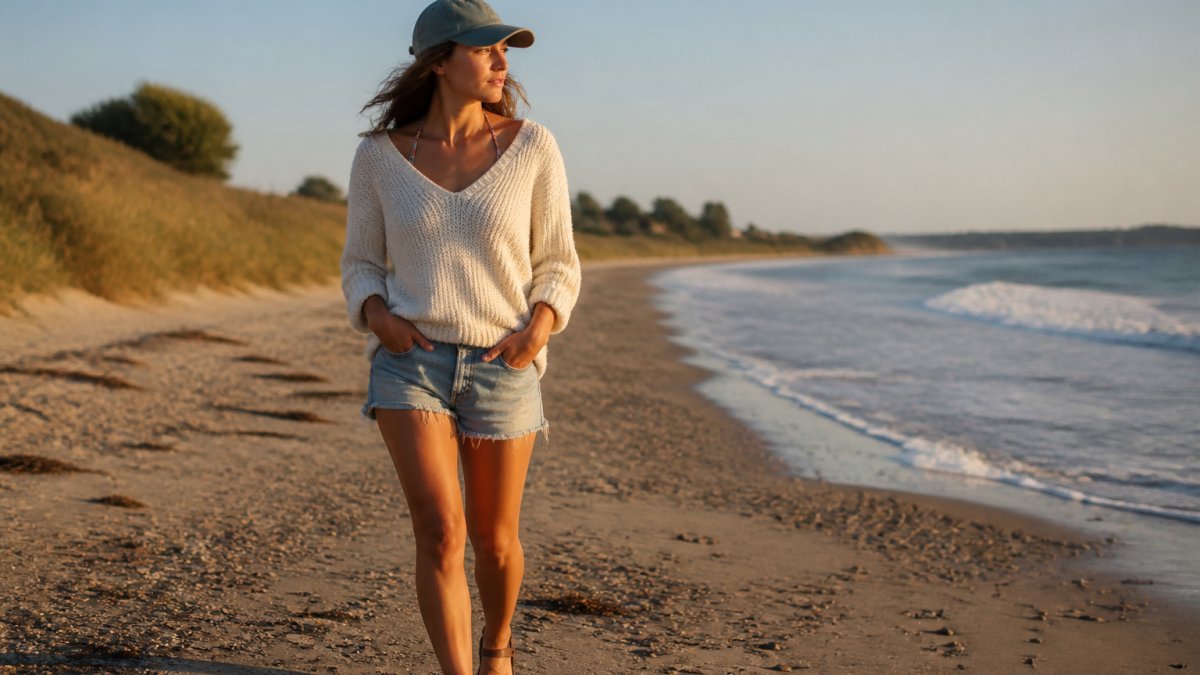
Daytime Outfits for Walking the Beach
For sand and sun, keep it light. A bikini top under an open cotton poplin shirt, denim shorts, and vintage sandals handles the heat. Our Rhody Surf Cap is built for exactly this: soft enzyme-washed cotton twill, a curved bill, and an adjustable strap that stays put in the wind.

Evening and Layered Looks for Cooler Coastal Weather
When the breeze rolls in, reach for a knit. The Rhody Local Tide Beach Sweater is a lightweight cotton-blend layer in cream with navy trim, easy over a swimsuit or a midi dress. Pair it with wide-leg trousers and you're set for a seaside dinner.

Fabrics and Fits That Make Vintage Coastal Clothing Work
Fabric decides whether an outfit feels coastal or cramped, and fit decides whether you actually wear it. Here's the garment-level version.
Match the Fabric to the Job
Breathable fabrics move air and dry fast. Match the fabric to where the piece sits in the outfit:
- Cotton poplin and cotton voile, best for shirts and cover-ups. Tight weave blocks wind, light enough for heat. Look for a thread count you can see light through without it being sheer.
- Linen and linen-cotton blends, best for trousers and camp shirts. Wrinkles are the point; a 55/45 linen-cotton blend wrinkles less than pure linen and costs less.
- Lightweight cotton and cotton-blend knits, best for sweaters and layers. A 12-gauge knit is the sweet spot: warm enough for evening fog, thin enough to tie around your shoulders.
What to avoid for daytime: heavy denim (traps heat and stays damp), polyester blends above 50 percent (holds odor and does not breathe), and any fabric labeled dry-clean-only if you plan to wear it near water.
Translate Vintage Sizing to Modern Sizing
Vintage sizing runs small, and the gap widens the further back you go:
- 1970s and earlier: add roughly two sizes to the labeled size to approximate modern fit
- 1980s: add roughly one size
- 1990s: sizing is close to modern, but cuts are boxier
Don't trust the tag alone. Measure the garment flat, chest pit-to-pit, waist, inseam, shoulder-to-shoulder, and compare it to a piece you own. Those four numbers tell you more than any size label.
Check Fit With Three Movements
Before you buy, or before you decide a vintage piece is a keeper, run this test:
- Raise both arms overhead. The hem should not rise past your waistband, and the shoulders should not pull.
- Sit down in a chair. The seat and thighs should not strain, and the waistband should not dig.
- Reach across your body. The back should not pull tight across the shoulder blades.
If a piece fails one test, it may still work with an alteration. If it fails two, size up or walk away.
Know What Alterations Can and Cannot Fix
A good tailor can take in a waist, shorten a hem, taper a leg, and replace a zipper, but can't add fabric where there is none. Common limits:
- Letting out a seam works only if the seam allowance is at least 1/2 inch, check inside the garment before you buy
- Shortening sleeves is easy on set-in sleeves, harder on raglan cuts
- Taking in a lined jacket costs more than an unlined one and can distort the drape
Budget for alterations before you commit. A $40 vintage blazer that needs $60 of tailoring is a $100 blazer, and it should fit like one.
Wash Before You Wear
Wash or dry-clean new-to-you vintage before the first wear, both for hygiene and to reveal shrinkage or color bleed while you can still return it. Wash cold, air dry, and check the seams, one that opens in the wash was already failing.
Build a Minimalist Coastal Capsule Wardrobe Around Vintage Pieces
A minimalist coastal capsule wardrobe is a small set of pieces that all work together, built around two or three vintage anchors. Start with ten to twelve core items, then let vintage do the rest.
Your capsule should cover:
- Tops: two white T-shirts, one striped long-sleeve, one cotton poplin shirt
- Bottoms: wide-leg trousers, denim shorts, one midi or maxi skirt
- Layers: a lightweight hoodie, a cable-knit sweater, a denim jacket
Every piece should pair with at least three others. If it doesn't, it isn't capsule material.
The Coastal Grandmother Aesthetic, Styled With Vintage Finds
The coastal grandmother aesthetic is a polished, understated look built on neutrals, knits, and easy tailoring, old-money coastal dressing that stays comfortable. Vintage finds slot in perfectly, since the style rewards pieces that look lived-in and loved.
Build the look with a cream knit, tailored trousers, a striped shirt, and simple leather sandals. Our Bristol 250th Pennant Distressed Dad Hat in navy cotton twill fits the mood: soft crown, worn edges, and a handcrafted feel that pairs naturally with denim and knits.

How to Spot Real Vintage Pieces and Get the Fit Right
Real vintage shows its age in useful ways. Check the tag first, older labels use different fonts, materials, and sizing, then the seams, button style, and zipper brand. Finally assess fit, since vintage sizing runs small.
Use this checklist before you buy:
- Tag looks period-correct, not reprinted
- Seams are intact under arms and at the hem
- Zipper and buttons work smoothly
If a piece fails two or more checks, leave it. There's always another.
Caring for Vintage Coastal Clothing So It Lasts
Vintage lasts when you wash it gently: cold water, mild detergent, no dryer for older fabrics. Salt and sun do the most damage, so rinse swimwear and beach layers after every trip, and store knits folded, not hung.
Quick care rules:
- Machine wash cold on a gentle cycle, or hand wash
- Air dry whenever possible
- Keep vintage pieces out of direct sun for long storage
Our own caps follow the same logic. Spot clean with warm water and dish soap rather than soaking the whole hat.
Frequently Asked Questions
What defines the vintage coastal aesthetic?
It combines retro silhouettes with beach-town ease: wide-leg trousers, shift and midi dresses, cap sleeves, and faded denim in white, navy, and blue. The vintage coastal look leans on lightweight fabrics like cotton poplin and silk, plus worn-in accessories such as a washed cotton cap or vintage sandals. The goal is a relaxed, timeless outfit that looks like it came from a family beach house closet, not a costume shop.
How do you mix vintage pieces with modern coastal staples?
Anchor the outfit with one vintage piece, then keep everything else modern and simple. Try a retro striped pant with a plain white T-shirt, or a 1970s-inspired midi skirt with a clean cotton tank. Stick to two or three colors, usually white, navy, and a coastal neutral, so the vintage item reads as intentional. Modern shapes and clean lines keep retro pieces from feeling dated.
What fabrics are best for a vintage-inspired coastal outfit?
Choose breathable, lightweight fabrics: cotton poplin, cotton-blend knits, linen, silk, and soft denim. These hold up in humid salt air and layer easily when the temperature drops. A cotton-blend knit sweater works over a swimsuit in the morning and with shorts at lunch. Avoid heavy synthetics that trap heat, and check vintage labels for natural fibers, which tend to age better and feel cooler on the skin.
How can I achieve a coastal grandmother aesthetic with vintage clothing?
Build around timeless silhouettes: tailored fits, cable-knit sweaters, midi skirts, and crisp white T-shirts. Add vintage touches like a striped button-down, pearl or shell accessories, and worn leather sandals. Keep the palette tight with white, blue, and coastal neutrals so the look stays calm rather than busy. The coastal grandmother aesthetic rewards restraint, so pick one statement piece and let the rest of the outfit stay quiet.
Styling vintage coastal clothing takes a little practice, but the formula is simple: neutral base, one vintage anchor, smart layers. Rhody Life makes that easier with vintage-inspired coastal apparel built for real seaside days, including our Bristol 250th anniversary merchandise and sticker sales that support local shoreline access. Start with one anchor piece and build from there.