
Table of Contents
- What Coastal Lifestyle Clothing for Men Actually Means
- Best Fabrics for Coastal Weather
- The Coastal Chic Dress Code for Men
- How to Style Coastal Apparel for Everyday Wear
- Building a Versatile Coastal Wardrobe for Men
- Sustainable and Eco-Friendly Coastal Fabrics
- Body Type Styling Advice for Coastal Clothing
- Conclusion
- Frequently Asked Questions
Last Updated: September 10, 2026
What Coastal Lifestyle Clothing for Men Actually Means
Coastal lifestyle clothing for men is a functional wardrobe built around breathable fabrics, relaxed silhouettes, and colors pulled from the shoreline: navy, white, sage, and sand. It blends the preppy aesthetic with performance apparel, so the same shirt works on a kayak, at a harbor-side cookout, and on a Tuesday commute.
This guide covers that system, from fabric selection to a capsule wardrobe you can pack in a duffel.
The preppy aesthetic and nautical influence sit at the center of it. Think boat shoes, Breton stripes, canvas belts, and a color palette that reads clean rather than costumed. The history of American nautical dress shows how much of this style descends from working waterfront clothing, which is exactly why it holds up: it was designed for wind, salt, and sun before it was ever designed for looks.
Best Fabrics for Coastal Weather
The best fabrics for coastal weather are natural fibers for daily wear and engineered performance textiles for activity. Linen and cotton breathe and age well; moisture-wicking and quick-dry synthetics handle sweat and spray. The mistake is treating these as rivals when they're teammates.
Natural Fibers: Linen and Cotton
Linen moves air better than almost anything else in a summer wardrobe. It wrinkles, and that's the deal you make. A common mistake is sizing up to hide the creasing, which just produces a billowy, shapeless fit. Buy your normal size and let the fabric do its thing.
Cotton is the more forgiving workhorse. Look for combed or ring-spun cotton in mid-weight knits for t-shirts, and a cotton-linen blend when you want structure without heat. Both fibers soften with washing, which is why vintage-inspired coastal apparel tends to look better in year three than year one.
Performance Apparel: Moisture-Wicking and Quick-Dry
Performance apparel earns its place when you're actually on the water. Moisture-wicking knits pull sweat off your skin, quick-dry weaves shed spray, and UPF-rated construction handles sun protection without a slather of lotion.
| Activity | Best Fabric Choice | Why It Works |
|---|---|---|
| Harbor walk, errands | Linen or cotton-linen blend | Breathes, looks sharp, handles humidity |
| Kayaking, paddleboarding | Quick-dry synthetic with UPF rating | Sheds water, dries fast, blocks sun |
| Fishing, early morning | Moisture-wicking base layer | Manages sweat under a shell |
| Evening cookout | Mid-weight cotton or merino blend | Warmth without bulk, holds shape |
sun protection guidance from the CDC is worth reading before you buy anything labeled UPF, because the rating only holds if the fabric fits properly and stays dry.
The Coastal Chic Dress Code for Men
The coastal chic dress code for men is smart-casual with a nautical lean: a well-fitted button-down or knit polo, chinos or tailored shorts, and one deliberate accessory. It reads relaxed without reading sloppy, which is the entire point. What separates a guide that helps from one that just lists items is specificity, the actual measurements, weights, and construction cues that make an outfit read coastal instead of generic.
The fit numbers that matter
Most style advice says "buy your size" and stops. Here is what that means in practice for a coastal wardrobe:
- Shoulder seam: should land at or just inside the edge of your shoulder bone. A seam that hangs past it reads oversized; one that sits inside it pulls across the chest.
- Sleeve length on a short-sleeve button-down: should end about 1 to 2 inches above the elbow. Longer reads dated; shorter reads athletic.
- Body length on an untucked shirt: should hit at or just below the hip bone, roughly mid-fly on your trousers. Anything past mid-thigh starts eating your leg line.
- Chino break: a slight break at the shoe is the coastal standard. A full break looks formal; no break looks cropped.
- Short inseam: a 7-inch inseam hits most men just above the knee; a 9-inch hits at or below it. Above the knee reads more resort, at the knee reads more everyday.
Fabric weights and why they change the read
A shirt's weight does more for how it drapes than its color does. As a general rule:
- Lightweight (roughly 4 to 5 oz): linen and cotton-linen blends. Breezy, wrinkles freely, best for peak summer and water-adjacent days.
- Mid-weight (roughly 5.5 to 7 oz): combed cotton, slub knits, and most knit polos. Holds shape, works from morning to dinner, the true workhorse of a coastal rotation.
- Heavyweight (8 oz and up): flannel overshirts, waxed cotton, and quilted vests. Shoulder-season only; too hot for a humid afternoon.
The restraint rule
What most guides miss is restraint. Coastal chic fails when you stack stripes, anchors, and rope belts in one outfit. Pick one nautical cue and let the rest stay quiet. A Breton stripe shirt with plain chinos and plain leather shoes works. The same shirt with an anchor belt, a rope bracelet, and boat shoes with contrast stitching reads costumed.
The practical test: if you can point to more than one item in your outfit that is "doing something," remove one.
How to Style Coastal Apparel for Everyday Wear
Styling coastal apparel for everyday wear comes down to layering and transition. A single well-chosen overshirt turns a t-shirt and shorts into something you can wear to dinner, and a light knit carries the same outfit into October. The difference between a wardrobe that works and one that sits in the closet is whether each layer has a job.
Smart layering for year-round comfort
Smart layering means building in threes: a base that manages moisture, a mid that insulates or adds texture, and an outer that blocks wind or rain. In coastal climates the temperature swing between a foggy morning and a sunny afternoon can be dramatic, a 20 to 30 degree swing is common in spring and fall, so layers you can shed matter more than any single heavy piece.
A workable formula, with the temperature band each layer is built for:
- Base (roughly 60°F and up): moisture-wicking tee or a lightweight merino crew. Merino regulates temperature better than cotton and resists odor, which matters if you are wearing the same shirt two days on a trip.
- Mid (roughly 50 to 65°F): linen button-down, flannel overshirt, or a quilted vest. The vest is the most versatile mid-layer because it adds core warmth without adding sleeve bulk under a shell.
- Outer (roughly 40 to 60°F, or any wind): a packable rain shell or a waxed cotton jacket for shoulder season. A shell with taped seams and a storm flap will outperform a heavier non-waterproof jacket in coastal rain.
The day-to-night transition
The most useful skill in a coastal wardrobe is changing one item, not the whole outfit. Three transitions that work:
- Beach to dinner: swap quick-dry shorts for chinos, keep the same t-shirt, add a linen button-down worn open over it.
- Office to harbor: keep the chinos and button-down, swap leather loafers for boat shoes, roll the sleeves once.
- Foggy morning to sunny afternoon: shed the shell, keep the mid-layer, and if the mid is a flannel, tie it around your waist rather than carrying it.
What to avoid
- Cotton as a base layer on the water. Once cotton gets wet it stays wet and pulls heat from your body. Use a synthetic or merino base for any activity where you might get splashed.
- A heavy insulated jacket as your only outer. It is too warm for a 55°F afternoon and not waterproof enough for real rain. A shell plus a mid covers more conditions with less weight.
- Layering two loose pieces. A relaxed linen shirt over a relaxed tee produces a shapeless silhouette. Keep one layer fitted and let the other drape.
layering and cold-weather safety guidance from the National Weather Service is a useful reference for understanding how wind and moisture change what a layer actually does.
Building a Versatile Coastal Wardrobe for Men
A versatile coastal wardrobe for men is roughly a dozen pieces that combine into dozens of outfits. Build around neutral bases, add two or three statement pieces, and stop when everything you own pairs with everything else.
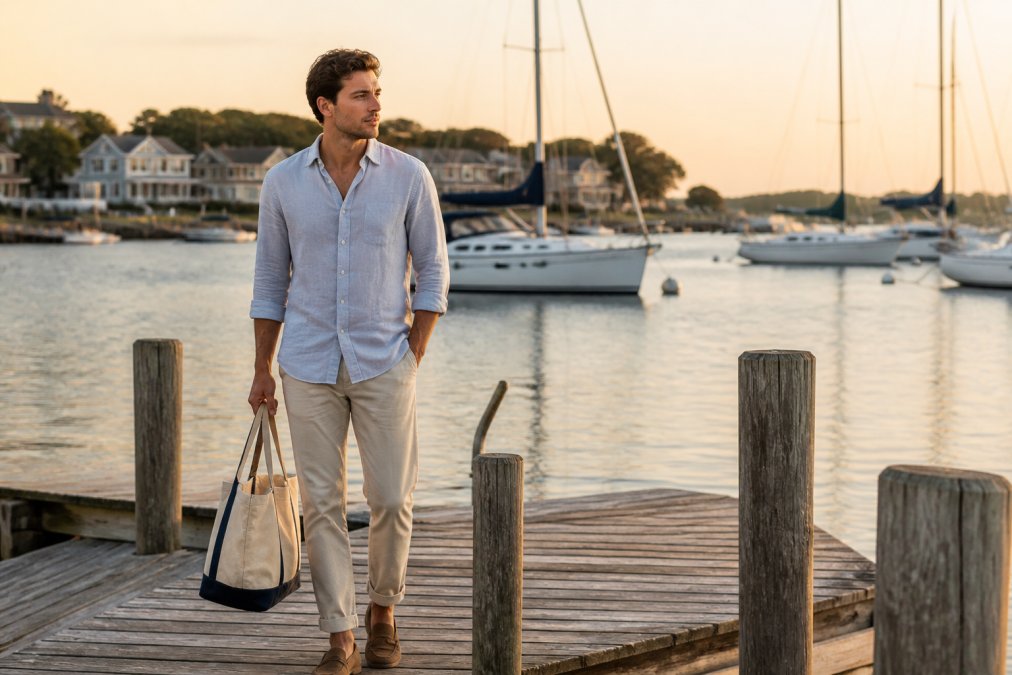
The capsule approach is the angle most buyers never hear. Retailers sell seasons; a capsule wardrobe for coastal travel solves the actual problem, which is packing light for a weekend that swings from beach to dinner.
- Two linen or cotton-linen button-downs (one white, one sage or light blue)
- Three breathable t-shirts in navy, white, and heather gray
- One knit polo in a mid-tone
- Two pairs of chinos or tailored shorts
- One pair of quick-dry shorts for water days
- One overshirt or light flannel for layering
- One packable rain shell
- Boat shoes and one pair of canvas sneakers
That list covers a weekend trip, a work-from-café day, and a harbor-side dinner without a second bag.
Sustainable and Eco-Friendly Coastal Fabrics
Eco-friendly coastal fabrics are the biggest blind spot in this category. Most buyers never ask where the fiber came from, and most product pages never say. That silence is the problem, not the fabric itself.
What to look for:
- Organic or transitional cotton, which avoids the heaviest pesticide load in conventional growing.
- European or Belgian linen, which generally uses less water than cotton per garment.
- Recycled synthetics for performance pieces, since they divert plastic waste and perform identically to virgin polyester.
- Natural dyes and low-impact finishing, which reduce the chemical load in the wash water near coastal communities.
A useful rule: the longer a garment stays in your rotation, the lower its footprint per wear. That's an argument for buying fewer, better pieces rather than chasing a certification label. the EPA's textile waste data makes the case plainly, since textiles remain one of the fastest-growing streams in municipal landfills.
Rhody Life takes a similar view, which is why our shoreline access sticker sales support local beach access rather than a distant offset program. Keeping the coast usable is the point.
Body Type Styling Advice for Coastal Clothing
Body type styling advice for coastal clothing starts with proportion, not size. Coastal fabrics drape, and drape is forgiving, but only if the shoulder seam and hem land in the right place.
For a shorter frame, keep hems above mid-thigh and avoid long, untucked button-downs that eat your leg line. A cropped overshirt or a tucked-in tee with a defined waist reads taller.
For a broader build, prioritize structured shoulders and vertical interest: an open button-down over a solid tee creates two clean lines down the torso. Skip heavy horizontal stripes.
For a slimmer frame, linen's natural volume works in your favor. A relaxed fit shirt in a mid-weight fabric adds visual weight without looking oversized.
For larger midsections, look for straight-cut chinos with a mid-rise and shirts that skim rather than cling. Moisture-wicking knits in darker tones are more forgiving than light cotton.
The throughline: fit at the shoulder, then let the fabric fall. Everything else is adjustable.
Conclusion
Building a coastal wardrobe that actually works takes more thought than adding a few striped shirts to your cart. It takes the right fibers, a layering system, and a capsule small enough to pack but flexible enough to wear year-round.
Our vintage-inspired coastal apparel and accessories celebrate Ocean State living, from historic Bristol waterfronts to beach days, and every shoreline access sticker sale supports keeping those places open to everyone. Our Bristol 250th anniversary merchandise connects you to the heritage behind the style.
Frequently Asked Questions
What is the coastal chic dress code for men?
Coastal chic for men blends relaxed tailoring with nautical touches. Think linen button-downs, tailored chinos, and leather boat shoes in navy, white, or sage tones. The goal is casual elegance that works for a waterfront dinner or a seaside event without looking overdressed. Focus on breathable fabrics and a clean, intentional fit rather than logos or loud patterns.
What fabrics are best for coastal weather?
Linen and cotton are the top natural fibers for coastal weather because they breathe and dry quickly. For active days, performance apparel with moisture-wicking and quick-dry properties keeps you comfortable. Look for lightweight construction and UV-resistant options if you spend long hours outdoors. Avoid heavy synthetics that trap heat and moisture close to your skin.
How do I build a versatile coastal wardrobe without overspending?
Start with a capsule of neutral pieces: two linen shirts, one pair of chinos, a quality polo, and a lightweight layer like a quarter-zip. Choose colors that mix easily, such as navy, white, and sage. Add one or two statement pieces that reflect your local pride. This approach keeps your coastal lifestyle clothing flexible for casual outings, outdoor activities, and social events.
Can coastal lifestyle clothing work for outdoor activities like kayaking and hiking?
Yes, if you choose pieces with functional design. Look for quick-dry fabrics, relaxed fit for movement, and sun protection for long exposure. Performance polos and lightweight shorts handle both on-water and on-trail use. Pair them with rugged durability in mind, and avoid cotton for intense activity since it stays wet and heavy.