
Table of Contents
- What Makes a Coastal Shirt Worth Buying
- Coastal Shirts Quality: Fabric, Construction, and Feel
- Coastal Shirts Price: What You Actually Pay For
- Best Coastal Shirts for Men: Fit, Sizing, and Style
- How to Care for Graphic T-Shirts So They Last
- When Paying More Makes Sense (and When It Doesn't)
- Conclusion
- Frequently Asked Questions
Last Updated: October 7, 2026
What Makes a Coastal Shirt Worth Buying
A coastal shirt is worth its price when the fabric holds up, the fit stays true after washing, and the design means something beyond a season.
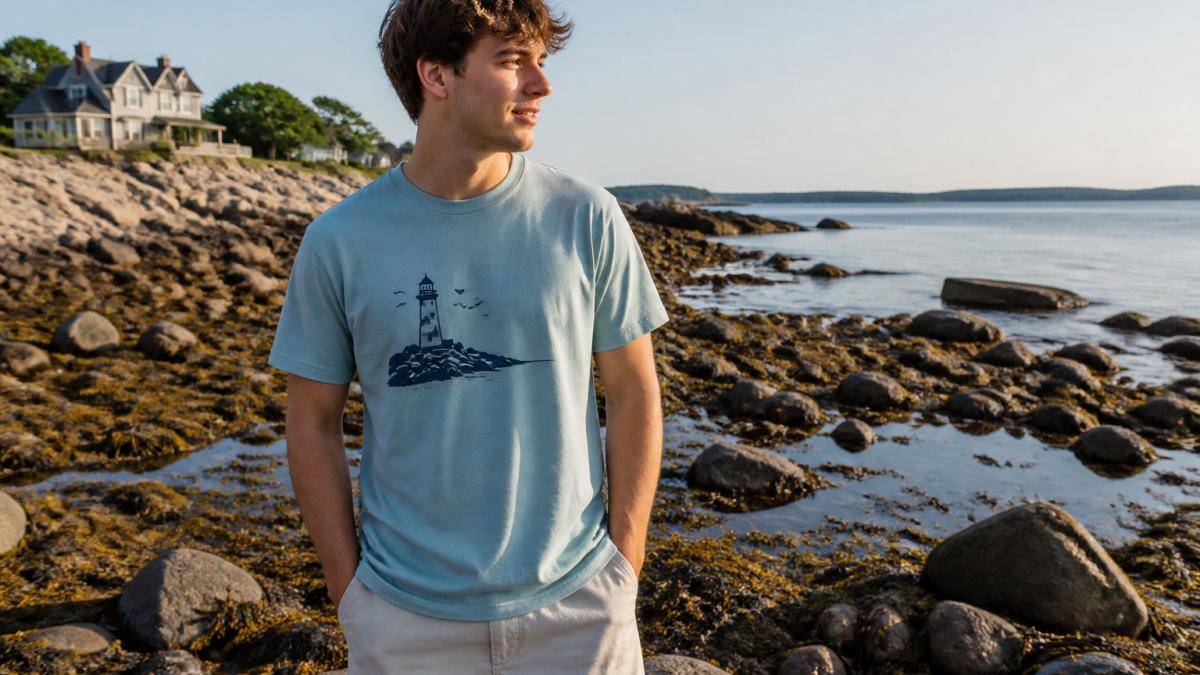
That last point matters more than most buyers admit. A plain blank and a coastal graphic tee can cost the same to make, but only one says something about where you're from.
Coastal Shirts Quality: Fabric, Construction, and Feel
Quality in a coastal shirt comes down to fiber content, fabric weight, and seam finishing, the three factors that decide how it feels on day one and how it looks after twenty washes.
Why Fabric Weight and Fiber Content Matter
Fabric weight, measured in ounces per square yard, is the clearest signal of durability. Lightweight cotton under about 4.5 ounces feels thin and loses shape quickly, while medium-weight fabric in the 5 to 6.5 ounce range holds structure while staying breathable.
Fiber content matters just as much. Combed and ring-spun cotton is spun to remove short fibers, leaving a smoother, softer yarn that resists pilling. Our Back to School Fish Tee uses 100% Airlume combed and ring-spun cotton, and the Wrack Line Tee uses a heavyweight 6.1 oz ring-spun cotton that arrives pre-shrunk.

Stitching, Seams, and Shape Retention
Look at the neckline first. A double-stitched neck resists the stretching that turns a crew neck into a scoop within a season, and set-in sleeves hold their angle better than dropped shoulders. Side-seamed construction keeps a straighter line through the torso, though tubular knits can last just as long if the stitching is good. Double-needle stitching at the hems and shoulders adds real longevity.
| Quality Signal | What to Look For | Why It Matters |
|---|---|---|
| Fabric weight | 5 to 6.5 oz | Holds shape, resists thinning |
| Fiber content | Combed, ring-spun cotton | Softer, less pilling |
| Neckline | Double-stitched | Won't stretch out |
| Seams | Side-seamed or tubular, double-needle | Straighter drape, fewer blowouts |
| Finish | Garment-dyed or pre-shrunk | Lived-in feel, predictable fit |
Coastal Shirts Price: What You Actually Pay For
A coastal shirt priced in the high twenties to low thirties pays for fabric, construction, design, and often a cause. But the same $30 can buy a heavyweight ring-spun tee or a thin promotional blank with a screen print, so the useful question is what each price tier delivers.
What Each Price Tier Buys
Most coastal and graphic tees fall into three rough bands, separated by how they're built rather than by the label.
| Price Tier | Typical Fabric | Construction Markers | Expected Lifespan |
|---|---|---|---|
| Budget (under about $15) | 4 to 5 oz tubular cotton, often single-stitched | Single-needle hems, taped or thin neck, no side seams | One season of regular wear before fading or stretching |
| Mid-range (about $18 to $28) | 5 to 6 oz combed or ring-spun cotton | Double-needle hems, reinforced neck, side-seamed or quality tubular | Two to three seasons with proper care |
| Premium (about $28 to $45) | 6 oz and up ring-spun, sometimes garment-dyed or pre-shrunk | Double-stitched neck and shoulders, side seams, small-batch printing | Three or more seasons, often longer |
These bands aren't absolute. A budget shirt from a maker that overbuilds can outperform a mid-range shirt from a brand that cuts corners, which is why fabric weight, fiber content, and stitching checks matter more than the price tag.
Where the Money Goes on a Higher-Priced Shirt
On a shirt like ours, the heavyweight ring-spun blank costs more than a basic wholesale tee, small-run printing costs more per unit than a bulk order, and garment dyeing adds another step. Then there's the design: a hand-drawn graphic takes an artist time, and a local cause takes a cut too. Our Wrack Line Tee exists partly to back continued public access to Rhode Island's shoreline.

Cost Per Wear vs. Sticker Price
Cost per wear is the better way to judge any shirt. A $28 tee worn forty times costs seventy cents a wear; a $12 tee that fades after five wears costs more than twice that per outing, and you replace it sooner. Run the numbers: a $30 shirt lasting three summers of weekly wear is roughly 100 wears at about thirty cents each, while a $12 shirt lasting one summer is roughly 35 wears at about thirty-four cents, plus replacement cost.
Resale and Discount Considerations
Two more price factors matter. Resale: well-made coastal tees from recognizable makers hold some value, especially limited or location-specific designs, lowering the true cost of a premium shirt if you ever sell it. Discounts: many coastal brands run seasonal sales, end-of-summer clearances, or bundle pricing, and a premium shirt bought at 20 to 30 percent off lands in mid-range territory while keeping premium construction.
Best Coastal Shirts for Men: Fit, Sizing, and Style
The best coastal shirt for men fits the way you actually wear it: relaxed but not shapeless, and true to size across the shoulders.
Here's how our core pieces compare:
| Shirt | Price | Fabric | Fit | Best For |
|---|---|---|---|---|
| Bristol Beach Club Lighthouse Graphic T-Shirt | $28.00 | 6.1 oz ring-spun cotton, garment-dyed | Relaxed, S to 4XL | Everyday wear, neutral styling |
| Back to School Fish Tee | $32.00 | Airlume combed and ring-spun cotton | Boxy relaxed, mid-length | Casual days, layering |
| Wrack Line Tee | $33.00 | 6.1 oz ring-spun cotton, pre-shrunk | Relaxed unisex, S to XL | Outdoor wear, local pride |
| Back to School Women's Tee Dark | $32.00 | Airlume combed and ring-spun cotton | Boxy relaxed, drapey | Beach days, town wear |
Sizing runs true on the Bristol Beach Club and Wrack Line tees, both of which publish full width and length measurements. If you're between sizes and want the relaxed look, take your normal size; for a closer fit, size down.

How to Care for Graphic T-Shirts So They Last
Washing a graphic T-shirt inside out in cold water and drying it on low heat is the single best way to protect the print and the fabric. Most print damage comes from heat and friction, not from wearing the shirt. But care isn't one-size-fits-all: cotton, cotton blends, and garment-dyed shirts each behave differently, and knowing which one you own tells you what to expect for shrinkage, fading, and pilling.
How Fabric Type Changes Care
100% cotton, ring-spun or combed. The most common coastal shirt fabric: breathes well, feels soft, takes a print cleanly.
Back to School Fish Tee — "Rhody Life" Coastal Graphic T-Shirt →
Cotton-polyester blends. Resist shrinking and wrinkling better than pure cotton and dry faster, but breathe less.
Tri-blends (cotton, polyester, rayon). Soft, drapey, and popular for vintage-style coastal graphics.
Garment-dyed cotton. The dye sits on the fiber surface, giving the washed, lived-in color, which also means it fades faster under heat.
Shrinkage, Fading, and Pilling: What to Expect
A 6 oz pre-shrunk cotton tee washed cold and dried low typically holds its size within about 1 to 2 percent; washed and dried hot, it can lose closer to 5 percent in length. Fading follows heat and sun: a printed graphic exposed to direct sun and hot drying can crack and dull within a single summer, while a shirt washed cold, dried low, and stored out of direct sun usually holds its print for two to three years.
A Care Routine That Actually Works
Follow the care label, but these habits apply to nearly every printed cotton shirt:
- Turn the shirt inside out before washing to reduce friction on the print
- Wash in cold or warm water, never hot, to limit shrinkage and fading
- Skip fabric softener, which leaves a residue that dulls prints
Our own care instructions match that approach: machine wash warm at a maximum of 105F, tumble dry low, and do not iron on the print. The Wrack Line Tee asks for cold water and no bleach. Garment-dyed shirts like the Bristol Beach Club tee should also stay out of a high-heat dryer, since heat fades the washed color.
Fit Consistency and Return Considerations
Care and fit are linked: if a shirt shrinks more than expected, the fit you bought isn't the fit you keep. That's why pre-shrunk and garment-dyed shirts are worth the small premium for a predictable fit after the first wash. Sizing also varies between makers, two shirts labeled large can differ by an inch or more across the chest, so check whether the seller publishes full width and length measurements, and compare those to a shirt you already own.
When Paying More Makes Sense (and When It Doesn't)
Paying more for a coastal shirt makes sense when the fabric is heavier, the construction is sturdier, and the design connects to something you care about.
- Buy the better shirt if you'll wear it weekly, want it to survive multiple seasons, and value a design tied to a place or cause.
- Buy the cheaper option if it's a one-time costume, an uncertain gift, or a shirt for messy activities where longevity doesn't matter.
- Skip the purchase entirely if the seller can't tell you the fabric weight, fiber content, or how the shirt is finished.
The gap between a well-made coastal shirt and a cheap one isn't the graphic, it's whether the shirt still fits and looks good after a summer of real use. Ask what you'd pay per wear over two years; the answer usually settles it.
Conclusion
Choosing a coastal shirt gets easier once you stop comparing stickers and start comparing construction, fabric weight, and cost per wear.
Rhody Life makes vintage-inspired coastal apparel for people who love where they live. Our tees use heavyweight ring-spun cotton, garment-dyed and pre-shrunk finishes, and designs tied to Rhode Island heritage, including our shoreline access tee that supports continued public access to the coast.
Frequently Asked Questions
Is $30 for a coastal shirt expensive?
It depends on what you compare it to. A basic big-box tee often runs $10 to $15, but those usually use lighter fabric and simpler construction. Coastal shirts like the Rhody Life Wrack Line Tee at $33 use heavyweight 6.1 oz ring-spun cotton, garment-dyed finishes, and double-needle stitching. If the shirt lasts two or three years of regular wear, the cost per wear drops below a dollar, which is competitive with cheaper options that fade or lose shape in months.
What should you look for in a quality coastal shirt?
Start with fabric weight and fiber content. A medium-weight 100% ring-spun cotton shirt holds its shape better than thin blends. Check the construction: double-stitched necks, side seams or tubular knit, and set-in sleeves all signal durability. Garment-dyed finishes feel softer from the first wear. Also look at fit consistency across sizes and whether the brand publishes measurements. Coastal shirts quality comes down to how the shirt holds up after 20 washes, not how it looks on the hanger.
How long should a good T-shirt last?
A well-made cotton tee worn weekly and washed properly should last two to three years before noticeable fading or shape loss. Heavier fabrics like 6.1 oz ring-spun cotton resist stretching at the collar and hem. Graphic prints last longest when you wash cold, turn the shirt inside out, and skip the dryer or use low heat. Shirts that pill, twist, or develop holes within six months usually point to lighter fabric or poor seam construction rather than normal wear.
How do you care for graphic T-shirts so the print doesn't crack?
Wash cold or warm at 105F maximum, turn the shirt inside out, and avoid fabric softener, which breaks down the print adhesive. Tumble dry on low or hang dry. Never iron directly on the graphic; if you must iron, use medium heat on the reverse side. Non-chlorine bleach is safe on some cotton tees, but skip it on prints. Following these steps keeps the design intact for years, which matters when you have paid $28 to $33 for a coastal shirt.
Are coastal shirts worth it for outdoor activities like kayaking and hiking?
For light outdoor use, yes. A 100% ring-spun cotton tee at 6.1 oz breathes well and feels soft against skin, which works for kayaking, beach walks, and casual hikes in mild weather. Cotton holds moisture, so it is not ideal for intense sweat-heavy activity where a synthetic performance fabric dries faster. If your outdoor time is mostly coastal and moderate, a heavyweight cotton coastal shirt is comfortable and durable enough for the job.