
Table of Contents
- What to Wear Kayaking: The Three-Layer System That Actually Works
- Best Clothing for Kayaking in Hot Weather
- Kayaking Clothes for Cold Weather and Cold-Water Safety
- What to Wear Under a PFD Kayaking: Base Layers and Fit
- Coastal Kayaking Apparel Comparison: Materials and Price Tiers
- Fit, Mobility, and Seam Placement for Kayak Comfort
- Saltwater Care, Durability, and Repair for Coastal Kayaking Apparel
- Conclusion
- Frequently Asked Questions
Last Updated: October 15, 2026
What to Wear Kayaking: The Three-Layer System That Actually Works
Choosing the best coastal apparel for kayaking comes down to one principle: dress for the water, not the sky.
The three-layer system works like this:
- Base layer: A thin synthetic or wool layer that moves sweat away from your skin.
- Mid layer: Fleece or wool that traps warmth when the air turns cool.
- Outer layer: A paddling jacket, splashwear, or wetsuit that blocks wind and water.
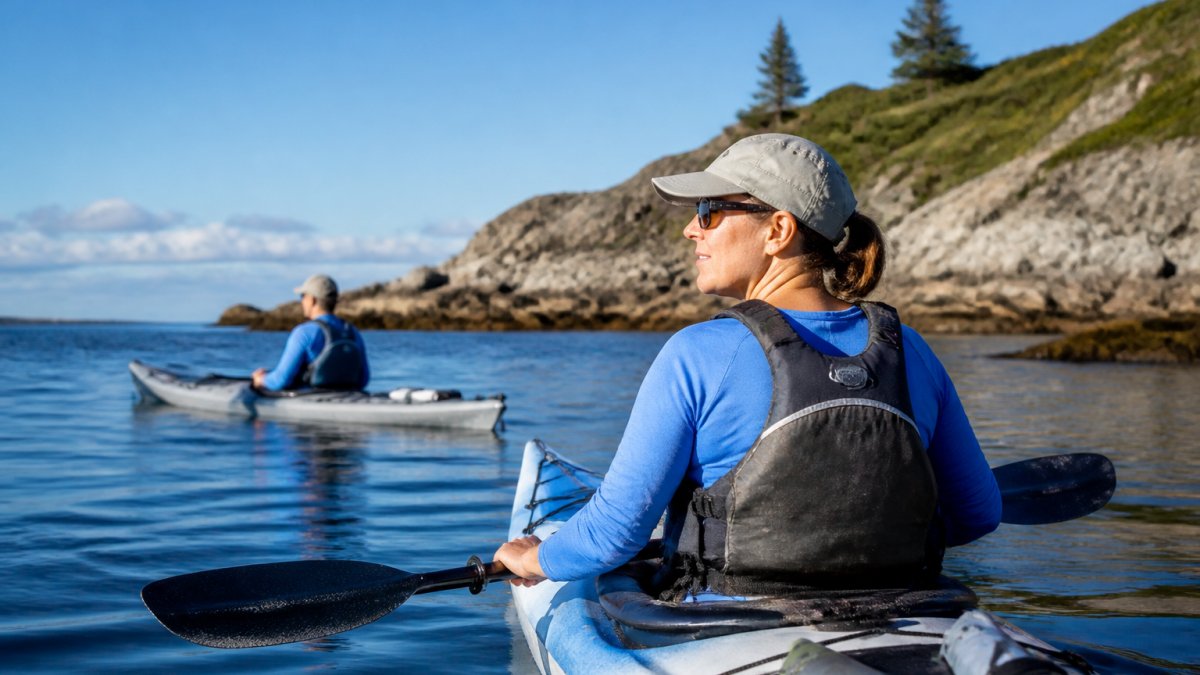
Cotton belongs nowhere in this system. It soaks up water, loses all insulating value, and dries slowly, which is exactly the wrong behavior when you're sitting in a wet cockpit. Synthetic fabric like polyester or nylon, plus wool and fleece, keeps working even when damp.
Best Clothing for Kayaking in Hot Weather
Hot-weather paddling is a sun-and-salt problem more than a temperature problem.
Long sleeves feel counterintuitive in July, but they beat sunscreen that washes off your arms within an hour. Look for UPF-rated fabric and a loose cut that lets air move.
How coastal conditions change the hot-weather kit:
- Wind: A 10-15 mph afternoon sea breeze feels cool on wet skin and can mask rising heat stress. A light, breathable windbreaker over the sun shirt blocks wind without cooking you.
- Salt spray: Dried salt stiffens fabric and abrades skin at the collar, cuffs, and waistband. Rinse your sun shirt in fresh water at the end of the day, or the next paddle will feel like sandpaper.
- Tides and exposure: A falling tide can strand you on a hot flat with no shade for hours. Pack a wide-brimmed hat and a spare long-sleeve layer even on a short trip.
- Reflected UV: Water reflects a significant share of UV radiation. UPF fabric on the underside of your arms and chin matters as much as the tops.
Material trade-offs for hot weather:
| Material | Drying Speed | UV Protection | Feel on Skin | Best For |
|---|---|---|---|---|
| Polyester | Fast | High when UPF-rated | Smooth, can cling | Sun shirts, shorts |
| Nylon | Fast | High when UPF-rated | Slightly cooler hand | Paddling pants, splash tops |
| Merino wool | Moderate | Low unless treated | Soft, odor-resistant | Base layers in shoulder season |
| Cotton | Slow | Low | Comfortable when dry | Shore wear only, never on the water |
For footwear, paddling shoes with drainage beat sandals that slip off in mud. Add a brimmed cap and sunglasses with an eyewear retainer, because losing a pair to the water gets expensive fast.
Kayaking Clothes for Cold Weather and Cold-Water Safety
Cold-water safety starts with the assumption that you will get wet. Kayaking clothes for cold weather need to keep insulating when soaked, which is why neoprene, wool, and fleece outperform everything else.
Water pulls heat from your body far faster than air does, so a splash from a wave or a wet exit in April is a genuine safety event, not an inconvenience. For cold conditions, most paddlers choose between two paths:
- Wetsuit: Neoprene traps a thin layer of water against your skin and warms it. Best for water that is cold but not frigid, and for paddlers who expect to get wet.
- Drysuit: Waterproof and breathable fabric keeps water out entirely. Best for genuinely cold water and long exposure, worn over a warm base layer.
Pair either with a paddling jacket, gloves, and a wool or fleece hat. Cold-water safety guidance from the National Weather Service on cold water hazards is blunt about the risk: cold shock can affect breathing and movement within minutes of immersion.
What to Wear Under a PFD Kayaking: Base Layers and Fit
What to wear under a PFD kayaking is a close-fitting base layer with no bulk at the shoulders, because a buoyancy aid only works when it sits snug against your torso.
A loose tee bunches under the straps, shifts while you paddle, and can ride up when you swim. A fitted synthetic or merino base layer stays put, wicks moisture, and lets the PFD do its job. Quick-dry underwear matters here too, since a wet waistband under a spray skirt is miserable on hour three.
Fit rules we follow:
- Snug at the shoulders, no fabric folds under the straps
- Nothing bulky at the waist where the spray skirt meets the cockpit
- Flat seams and no thick pockets that press against your ribs
Coastal Kayaking Apparel Comparison: Materials and Price Tiers
Most guides list apparel types without comparing them. This section puts the main coastal kayaking pieces side by side so you can match the gear to the conditions instead of guessing.
Apparel types compared by protection, comfort, conditions, and use case:
| Apparel Type | Water Protection | Wind Protection | Breathability | Insulation When Wet | Best Conditions | Typical Use Case |
|---|---|---|---|---|---|---|
| Sun shirt | None | Low | High | Low | Warm air, warm water, high UV | Day paddles, flat water, summer |
| Splash top / paddling jacket | Splash only | High | Moderate | Low | Cool air, spray, shoulder season | Coastal bays, choppy water |
| Wetsuit | Immersion | Moderate | Low | High | Cold water, expected wet exits | Surf zones, cold-water paddling |
| Drysuit | Full immersion | High | Moderate | Depends on base layer | Frigid water, long exposure | Winter paddling, remote coast |
| Paddling pants | Splash only | Moderate | Moderate | Low | Cool air, spray over the deck | Shoulder-season trips |
| Neoprene footwear | Immersion | Low | Low | High | Cold water, rocky shorelines | Launching and landing |
Price tiers and what they buy you:
| Tier | Typical Pieces | Materials | Best For |
|---|---|---|---|
| Budget | Sun shirt, quick-dry shorts, cap | Polyester, nylon | Warm-weather day paddles |
| Mid-range | Paddling jacket, splashwear, paddling pants | Coated nylon, fleece | Shoulder-season coastal trips |
| Premium | Wetsuit, drysuit, neoprene footwear | Neoprene, waterproof breathable fabric | Cold water, long exposure |
How to choose between a wetsuit and a drysuit:
Local Tide Organic Cotton Baseball Cap →
- Wetsuit: Neoprene traps a thin layer of water against your skin and warms it. Best for water that is cold but not frigid, and for paddlers who expect to get wet. Less expensive, more flexible, but stays damp and can chill you when you stop moving.
- Drysuit: Waterproof and breathable fabric keeps water out entirely. Best for genuinely cold water and long exposure, worn over a warm base layer. More expensive, bulkier, but far more comfortable on a long, dry paddle.
How to choose between a splash top and a paddling jacket:
- Splash top: Lighter, less expensive, blocks spray from the deck and light rain. Good for warm air and cool water.
- Paddling jacket: Heavier, with neck and wrist seals, blocks wind and sustained spray. Good for cool air and choppy coastal water.
For the on-land half of a coastal day, our own Local Tide Organic Cotton Baseball Cap at $35 handles sun protection with an unstructured six-panel fit and a brass-slider closure, and the Rhody Local Tide Beach Sweater at $78 is the layer we reach for after the boat comes out of the water.


Fit, Mobility, and Seam Placement for Kayak Comfort
Fit is the most underrated part of kayak comfort, and most guides skip it entirely.
Look for raglan or set-in sleeves that let your shoulders rotate freely through a full stroke.
Paddling pants should have a high, adjustable waist that stays put when you sit, and cuffs that seal without cutting off circulation.
For a paddling-adjacent layer that moves with you, the Local Tide Women's Yoga & Pilates Tank at $39 uses a nylon-spandex blend with a crossover open back that stays flat under a PFD.

Saltwater Care, Durability, and Repair for Coastal Kayaking Apparel
Salt is the quiet killer of coastal paddling gear. Rinse everything in fresh water after every saltwater trip, because dried salt crystals abrade fabric, stiffen zippers, and corrode the metal hardware on PFDs and closures.
A recommended routine:
- Rinse wetsuits, drysuits, and paddling jackets inside and out in cool fresh water
- Hang gear to dry in shade, never direct sun, since UV breaks down neoprene and coated nylon
- Lubricate zippers with a purpose-made wax, never oil
- Check and re-seal taped seams at the start of each season
For casual coastal apparel, the same logic applies in a gentler form. A Rhody Life Wrack Line Tee at $33 is garment-dyed ring-spun cotton built for shoreline mornings, and a cold machine wash with a low tumble dry keeps it soft for years. Sticker sales from our shop support local shoreline access, which matters to anyone who paddles the coast.
Conclusion
Coastal kayaking punishes gear that was chosen for looks instead of conditions. Build your kit around the three-layer system, respect cold water, and rinse the salt out of everything.
Rhody Life offers vintage-inspired coastal apparel with high-quality construction, Rhode Island heritage baked into every design, and shoreline access support through sticker sales. Get started with Rhody Life and wear your coastal pride from the launch to the parking lot.
Frequently Asked Questions
What should you wear kayaking?
Start with a synthetic base layer that wicks moisture, add an insulating mid layer like fleece if the air or water is cool, and finish with a windproof or waterproof outer shell. Avoid cotton because it holds water and loses insulation when wet. A brimmed cap, sunglasses with a retainer, and paddling shoes complete the kit. Adjust layers as conditions change on the water.
What is the best clothing for kayaking in hot weather?
In hot weather, wear a lightweight long-sleeve sun shirt made from polyester or nylon with UPF-rated fabric. Quick-drying paddling shorts or pants protect your legs from sun and spray. A brimmed cap and sunglasses with an eyewear retainer shield your face and eyes. Choose light colors that reflect heat and avoid dark cotton, which soaks through and stays wet.
Are cotton clothes suitable for kayaking?
No. Cotton absorbs water and dries slowly, which pulls heat away from your body and increases the risk of cold-water safety issues. Once wet, cotton loses its insulating value and feels heavy against your skin. Synthetic fabrics like polyester, nylon, and fleece, or wool, stay warmer when damp and dry much faster. Save cotton for the drive home.
What should you wear under a life jacket while kayaking?
Wear a snug, synthetic base layer or sun shirt under your PFD so the fabric moves with you and does not bunch. Avoid bulky seams or thick hoodies that create pressure points under the straps. A fitted long-sleeve top with flat seams works well in warm weather, while a fleece mid layer adds warmth in cold conditions. Test the fit before launching.
What should you wear kayaking in cold weather?
For cold weather, wear a thermal base layer, a fleece or wool mid layer, and a waterproof, breathable paddling jacket or drysuit. Neoprene gloves, a neoprene cap or hood, and paddling booties protect your extremities. Check the water temperature, not just the air temperature, because cold water can cause rapid heat loss if you capsize.
Do you need special pants for kayaking?
Paddling pants or wetsuit leggings are worth it because they dry fast, block wind, and protect your legs from spray and sun. Regular jeans or cotton sweatpants soak up water and restrict movement in the kayak. In warm weather, quick-dry shorts work for short trips, but add paddling pants for longer outings or cooler conditions.
How do you protect yourself from the sun while kayaking?
Wear UPF-rated long-sleeve shirts, a brimmed cap, and sunglasses with an eyewear retainer. Apply broad-spectrum sunscreen to exposed skin like your face, ears, neck, and hands, and reapply every two hours. Water reflects UV rays, so you get sun exposure from above and below. Lightweight sun gloves and paddling pants cover the areas sunscreen misses.